Our Western Corner That Holds Its Own Silence
In the far western corner of my garden, where the sun lingers before it finally drops behind the fields, two amaranth plants grow quietly, slightly apart from the rest of the flowers. They have been there for more than a year now, rooted deep, steady through wind, rain, and changing seasons. These are foxtail amaranth,…
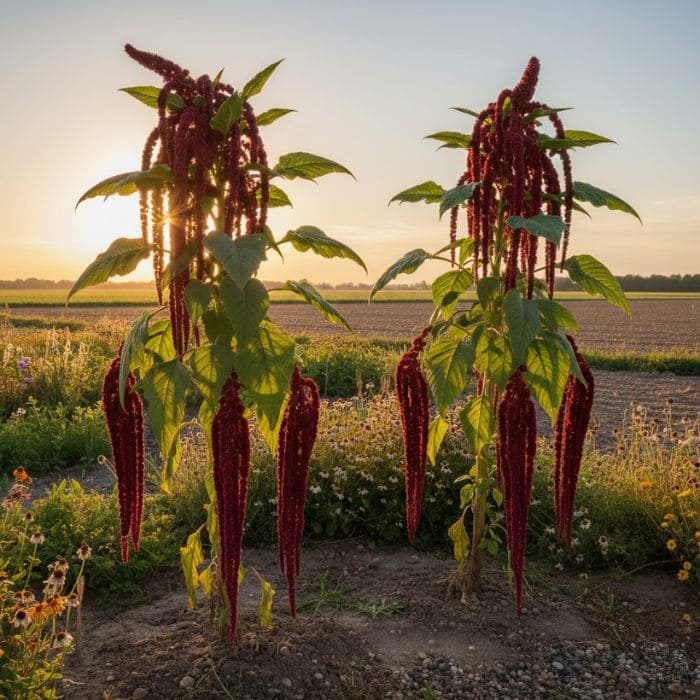
In the far western corner of my garden, where the sun lingers before it finally drops behind the fields, two amaranth plants grow quietly, slightly apart from the rest of the flowers.
They have been there for more than a year now, rooted deep, steady through wind, rain, and changing seasons.
These are foxtail amaranth, and even when nothing else is in bloom, they still feel present, as if they are waiting patiently for their moment.
By mid-summer, each plant reaches a little over five feet tall. Their stems are thick and firm, pale green with hints of red near the base, strong enough to hold the heavy blooms without support.
The leaves are wide and matte, a deep green that stays calm even in the heat. What draws the eye, though, are the flowers themselves, long tassels that hang downward like velvet ropes, dense and soft at the same time.
The color is a deep red, somewhere between wine and dried cherries, growing richer as the weeks pass. When the wind moves through them, the tassels sway slowly, brushing against each other, never stiff, never sharp.
July in Willow Bend

Every year, they bloom in July, right when Willow Bend feels thick with summer. July here is warm and humid, with long daylight hours and heavy air that settles over the land.
Mornings begin soft and quiet, but by noon the sun presses down firmly, and the soil holds heat until evening. Afternoon storms come through without much warning, brief but intense, leaving the garden damp and refreshed.
As the day fades, the western light turns golden, then amber, and finally soft orange. That is when the foxtail amaranth looks its most beautiful. The red tassels catch the low sun and glow against the green meadow behind them, almost as if they are lit from within.
Bees slow down around them. The breeze off the river cools the air just enough to make you stay outside longer than planned.
Why Foxtail Amaranth and Not the Others
There are many types of amaranth that could have grown there.
Some grow upright, like Prince’s Feather, tall and dramatic with stiff plumes pointing toward the sky. Others, like Love-Lies-Bleeding, spill downward in thick red curtains, bold and almost theatrical. There are varieties with green tassels, golden tones, even soft pinks, each with its own beauty.
But my grandmother chose foxtail amaranth. She said it felt quieter and strong without being loud.
The way the flowers bend instead of standing rigid reminded her of how life often works, how strength does not always mean standing straight, but knowing how to yield without breaking.
Foxtail amaranth lasts a long time too. Even as it dries, it keeps its shape and color, holding on when other flowers have already faded.
The Story She Had Never Told Me
A few months ago, I was watering that corner of the garden in the late afternoon. The hose rested lightly in my hand, water soaking slowly into the soil. My grandmother was nearby, checking leaves, brushing dirt from her palms.
When I reached the amaranth, she stopped working and looked at them for a long moment, longer than usual.
She told me that nearly a hundred years ago, when she and my grandfather got married, their wedding was simple in every possible way.
Life then was about survival, work, and faith. The ceremony took place in a small Catholic church, stone walls cool even in summer, wooden benches worn smooth by generations before them. There were no decorations meant to impress, no elaborate arrangements, no excess.
Above them, tied loosely and placed with care, were just foxtail amaranth and a few roses. That was all.
She said she still remembered how the amaranth hung downward, deep red, soft and heavy, moving slightly when someone shifted nearby.

She and my grandfather stood there, hand in hand, before God, and spoke their vows quietly, promising to stay together in health and sickness, in fullness and scarcity, for as long as life allowed them.
The amaranth was chosen because it symbolized endurance, a love that does not rush or fade quickly, a life built through persistence rather than comfort. The roses were there because my grandfather insisted, even when they had little, because he believed love deserved beauty too.
How That Meaning Lives On
Foxtail amaranth carries meaning that goes beyond appearance. It has long been seen as a symbol of lasting love, of life that continues, of resilience that does not need attention to survive.
It grows easily, adapts well, and holds its form even after blooming, much like the kind of marriage my grandparents shared, steady, quiet, and enduring.
When my grandmother finished telling me that story, she said she had not thought about those wedding flowers in years. Planting the amaranth again felt like bringing a small piece of that day back into the present, not as memory alone, but as something living.
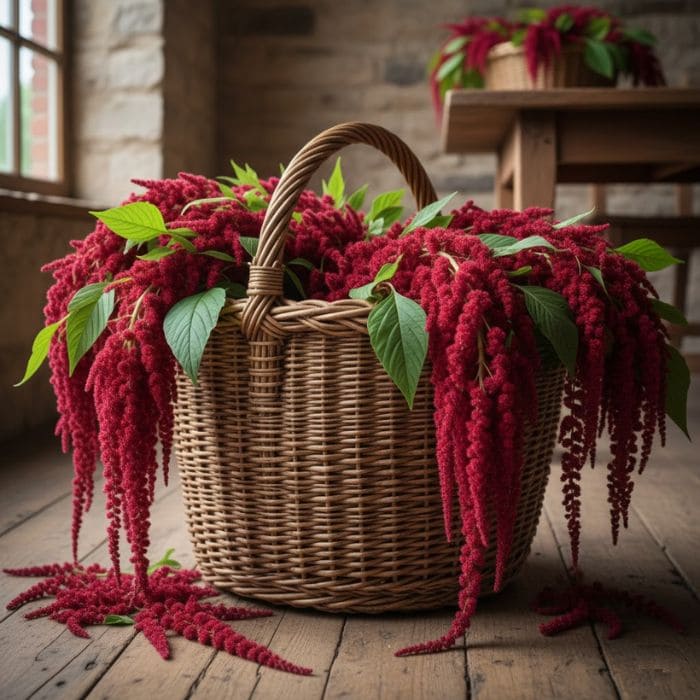
Every July, when those two foxtail amaranth bloom in the western corner, it feels like a quiet renewal of a promise made long before I existed.
They stand where the sun sets, glowing red in the evening light, holding the weight of years without showing strain.
When I water them now, I do it slowly. I think about how love, like these plants, grows best when it is cared for steadily, without rushing, without noise.