The Corner Attracts Most Pollinators In My Garden
For a long time, I was certain that the most alive corner of my garden would be the roses. Or maybe the lilies, with their height and drama. Jasmine also seemed like a good guess, especially in the evenings when its scent settles into the air and feels almost visible. But the garden had other…
For a long time, I was certain that the most alive corner of my garden would be the roses. Or maybe the lilies, with their height and drama.
Jasmine also seemed like a good guess, especially in the evenings when its scent settles into the air and feels almost visible. But the garden had other plans.
The place that gathers the most movement, the most sound, the most quiet activity, is the coneflower corner.
How It Began Without Intention
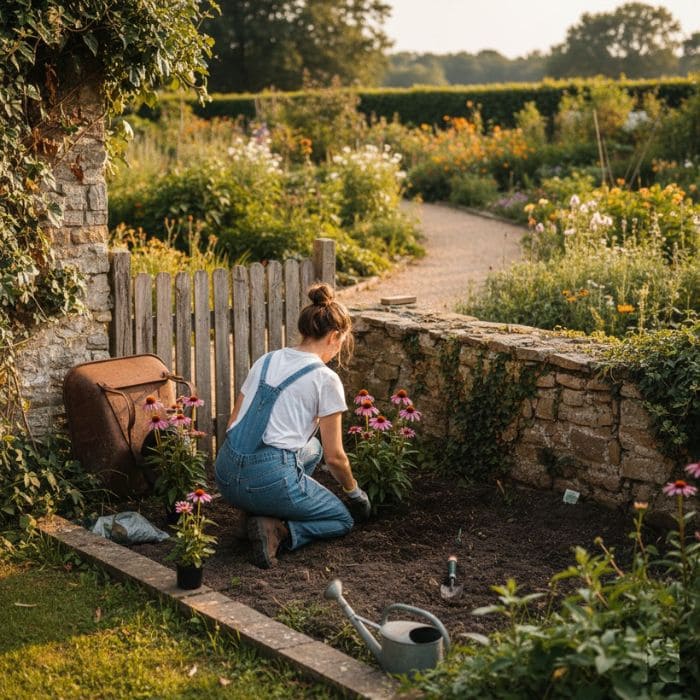
Two years ago, that corner was nothing special. It sat slightly away from the main paths, not too close to the house, not too far either.
The soil there was decent but not perfect. I planted coneflowers simply because I needed something reliable to fill the space.
I chose a few young plants, spaced them out, watered them in, and moved on.
At the time, I did not imagine growth. I imagined coverage. Something green, something steady.
The first year, that is exactly what I got. The plants stayed within their places. A few purple blooms opened and a few bees passed through.
I noticed them, appreciated them, and then went on with my work.
The Slow Expansion I Almost Missed
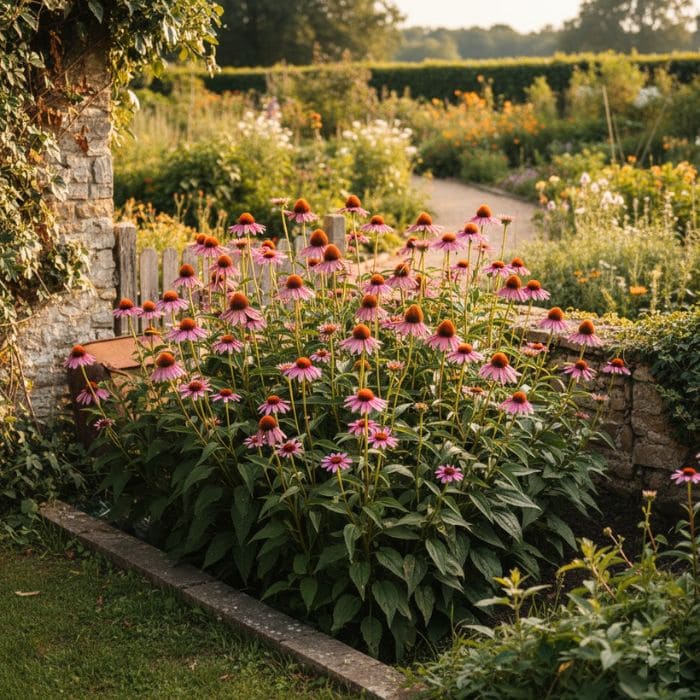
During the second year, the coneflowers began to change the space quietly. New stems appeared in early summer, not dramatically, but confidently.
Clumps grew wider. Leaves shaded the soil more fully, keeping moisture where it belonged.
By the time flowering started, the corner no longer felt like a background space. It felt like it had claimed itself.
Now the plants stand three to four feet tall, strong without looking stiff. Their stems are upright and firm, able to hold blooms through wind and rain.
The flowers themselves are simple but expressive. Purple-pink petals droop gently around raised copper and orange centers, each one slightly different, none trying to be perfect.
Where the Day Begins for the Garden
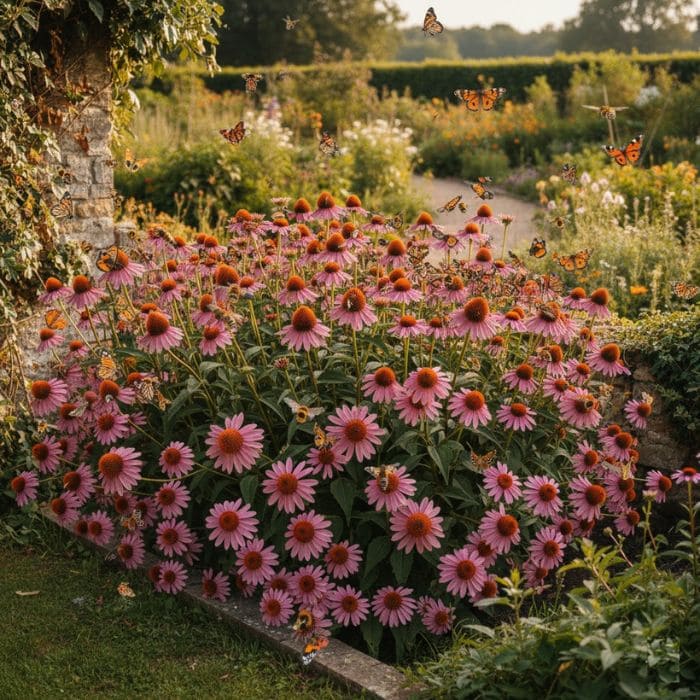
If I walk through the garden early in the morning, this is where I hear life first.
Before the roses fully wake and before the butterflies arrive, a low hum settles over the coneflowers as bees begin their work.
By late morning, butterflies appear. Monarchs glide in slowly, as if they have all the time in the world.
Painted ladies flicker in and out, never staying long in one place. Smaller butterflies land carefully, wings opening and closing as they feed.
The coneflowers hold them easily, offering wide centers and strong stems that do not sway too much.
Why This Corner Wins Over the Others
It took me a while to understand why this place draws so much attention when other flowers do not.
Roses are beautiful, but their nectar is limited. Lilies bloom boldly, but briefly. Jasmine fills the air but feeds very little. Coneflowers do something different and they give consistently.
They bloom for a long time, and even when the petals begin to fade, they do not become useless. Their seed heads remain upright and valuable.
Later in the season, birds arrive. Goldfinches perch lightly, tugging at seeds with surprising patience. The corner changes visitors, but it never empties.