The Pollinators I Misunderstood at First
When people talk about pollinators in a garden, they usually mean bees, butterflies, maybe birds if they are lucky. I used to think the same way. I never once thought about ants as anything other than visitors passing through, or worse, something that needed to be kept away. That changed in the peony field. Behind…
When people talk about pollinators in a garden, they usually mean bees, butterflies, maybe birds if they are lucky. I used to think the same way.
I never once thought about ants as anything other than visitors passing through, or worse, something that needed to be kept away. That changed in the peony field.
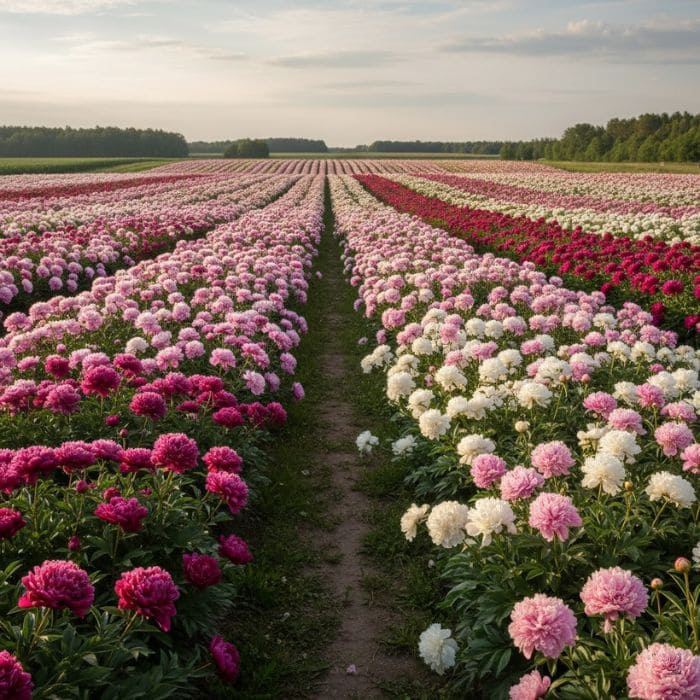
Behind the main garden, stretching farther than most people expect, we have a long area planted entirely with peonies. It runs for over one kilometer, following the gentle curve of the land, planted in loose rows that allow air to move freely between the plants.
Most of them are common, classic peonies, nothing rare or decorative, just strong, traditional varieties chosen because they handle our winters and return reliably each year.
We planted them three years ago, and I will be honest, I was still learning. Peonies are patient plants, but they are also particular, and I did not yet understand all of their habits.
The First Time I Noticed the Ants
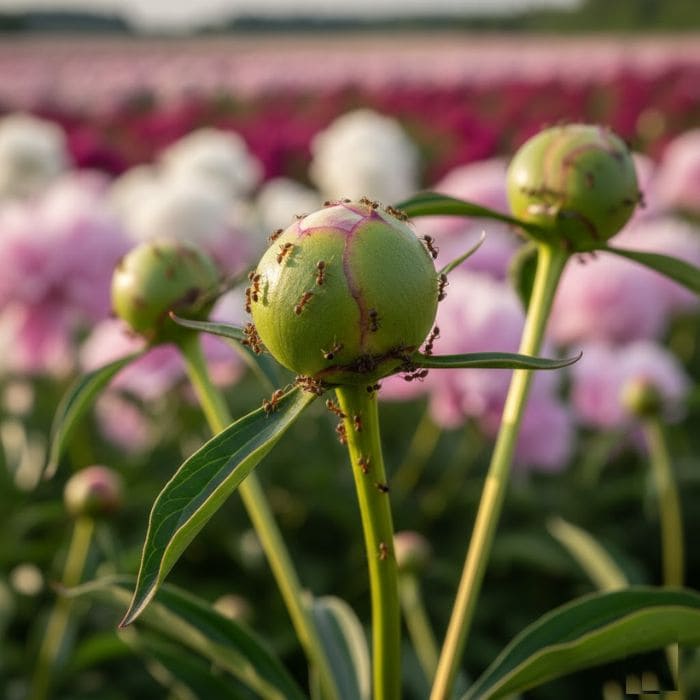
The first real bloom season came late spring, when thick buds began to swell at the tops of the stems.
One morning, as I walked the rows, I noticed movement. Tiny lines of ants crawling over the buds, clustering at the tight green heads, moving carefully along the surface.
My first reaction was fear. I had always heard that ants meant trouble. I worried they were feeding on the buds, damaging them before they had a chance to open. I imagined blooms ruined before they ever had a chance to show themselves.
That same day, I watered more heavily than usual, hoping to discourage them without harming the plants. I avoided using anything chemical. That never felt right to me.
Still, I kept watching, growing more anxious as the ants continued to return, undisturbed by my efforts.
What I Thought I Was Seeing
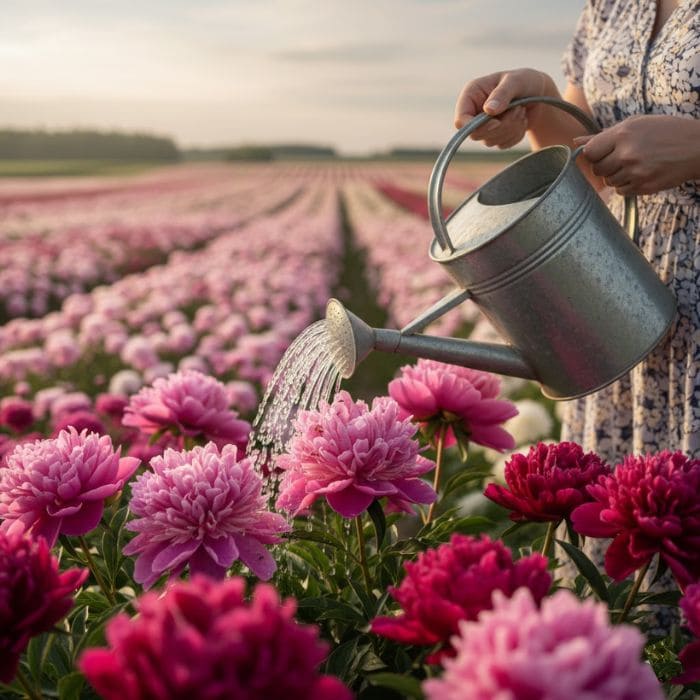
The ants were everywhere. On nearly every bud. Crawling over the sticky surface, moving in careful paths, sometimes disappearing under the folds of the outer layers.
I felt responsible, as if I had made a mistake by planting so many peonies without understanding what they needed.
Some buds took longer to open, and I blamed the ants. Others opened normally, full and heavy with petals, and that confused me. If the ants were harming them, why did the flowers still look so strong?
What My Grandmother Saw Differently
One afternoon, she watched me standing between the rows, hose in hand, frowning at the buds. She did not interrupt right away. She just observed, then finally said, “Why are you trying to wash them away?”
I told her what I was afraid of. That the ants were hurting the peonies. That they were stealing something from the buds before they bloomed.
She shook her head slowly.
“They’re not hurting them,” she said. “They’re helping them.”
She explained it simply, the way she always does. Peony buds produce a sticky, sugary substance on their outer layers.
That substance protects the developing flower inside and helps keep it sealed while it grows. Ants are attracted to that sugar. They come to collect it, not to eat the flower.
As they move over the buds, they clean off that sticky coating. In doing so, they help the petals loosen and open more easily when the time is right.
Without ants, some peonies struggle to open fully, especially in cool or damp weather.
“They’re not pests,” my grandmother said. “They’re caretakers.”
Watching With New Eyes

After that, I stopped trying to interfere. I let the ants do what they had always done. I walked the rows differently, slower, more observant.
I noticed how carefully the ants moved, never chewing, never tearing, only gathering what the plant offered.
And then I noticed something else. The peonies opened beautifully. Large blooms, full and heavy, petals layered tightly at first, then relaxing outward over several days. Whites, soft pinks, deeper blush tones.
The ants disappeared once the flowers fully opened, their work finished.