Huhu Our Garden Was Not Ours Alone
Yesterday morning, I was already in the garden earlier than usual. The air was still cool, the kind that carries sound far if you move too quickly, so I worked slowly, moving from one section to another without any plan. Our garden is large, open, and connected naturally to the land around it. On the…
Yesterday morning, I was already in the garden earlier than usual. The air was still cool, the kind that carries sound far if you move too quickly, so I worked slowly, moving from one section to another without any plan.
Our garden is large, open, and connected naturally to the land around it. On the western side, it opens toward a strip of mixed woodland and tall grass, a quiet corridor deer often use when they move between cover and open ground to look for food.
There is no hard boundary there, no fence strong enough to say this side is only ours.
I have always known they pass through. Most of the time, you only notice after they are gone. Bent stems, pressed grass, and a few missing leaves. Yesterday, I saw them while they were still here.
Where They Came From
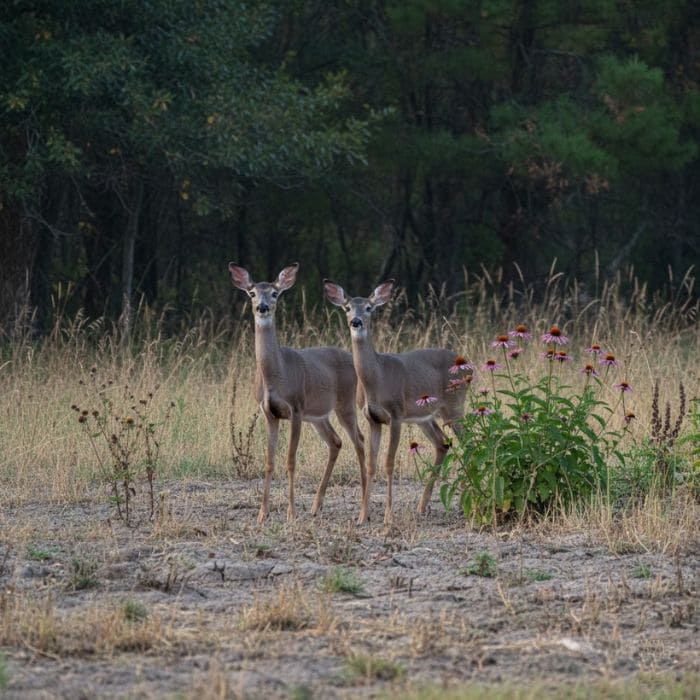
The deer entered from the west, exactly where the meadow thins into trees. That area stays cooler and shaded longer in the morning, and food is not as easy to find there lately.
The grass has been dry, and the wild plants are slower to recover. Gardens become obvious in times like that. They smell different and they grow differently.
I noticed movement near the coneflower corner first. At a glance, it looked like shadow shifting, but then a head lifted, ears upright, eyes alert.
A second deer stepped forward behind the first. Both were young, slim, their coats a soft brown-gray that blended easily into the early light.
They moved carefully, but not nervously. Hunger makes animals brave.
Watching Them Eat
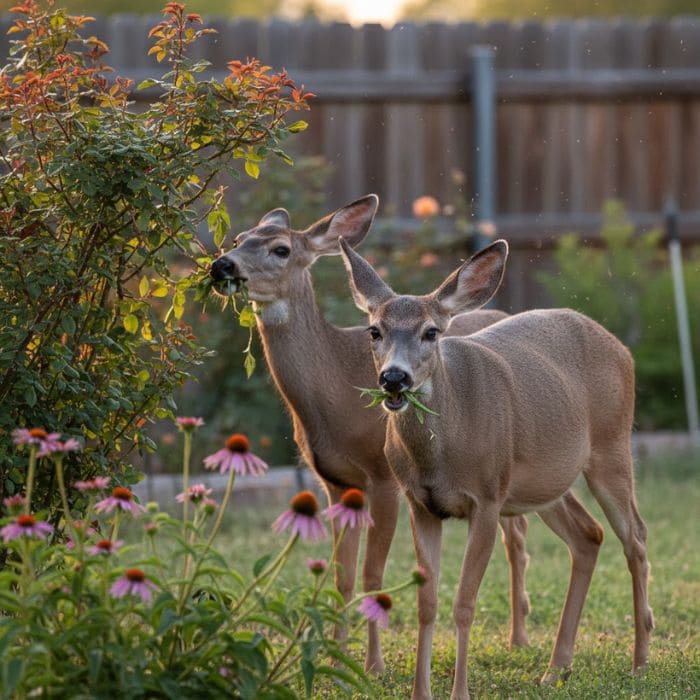
One deer walked directly toward the coneflowers. It lowered its head and began pulling at the stems cleanly, chewing fast, barely lifting its head between bites.
The other drifted toward the roses, choosing new growth first, reaching into the bushes with surprising confidence. Thorns did not slow it down. It stripped leaves and tender shoots quickly, chewing in steady rhythm.
They ate like they had not eaten properly in a while.
I stood still where I was, close enough to see the movement of their jaws, far enough not to disturb them. I could see the faint outline of ribs along their sides.
A Change in Their Choice
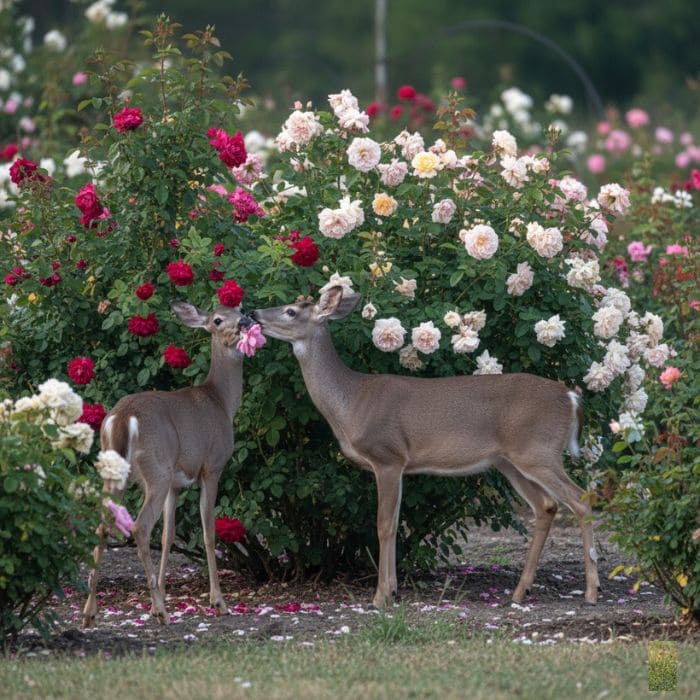
After a few minutes, the deer at the coneflowers stopped. It lifted its head, chewing slowly now, ears turning. It looked around once, then stepped away from the coneflowers entirely and moved toward the roses.
The coneflowers were left mostly intact. A few broken tops, some bent stems, but nothing severe.
The roses, now with two deer working through them, were a different story.
I felt the familiar pull between instinct and responsibility. I did not want to chase them away as well as scare them or teach them fear. But I also did not want to stand there and lose entire rose bushes in silence.
Choosing a Different Response
I did not shout. I did not clap my hands or move suddenly. Those reactions stay with animals longer than people realize.
Instead, I stepped back slowly and thought about what I could offer that would redirect them without turning the moment into conflict.
Near the edge of the property, closer to where the soil stays damp, tall grass grows thick and sweet. It is not part of the formal garden, just open ground that we let be.
I walked there quietly, pulling up long handfuls of fresh grass, careful not to rip the roots.
I gathered as much as I could carry, then laid it down in an open space well away from the roses. Then I stepped back and waited.
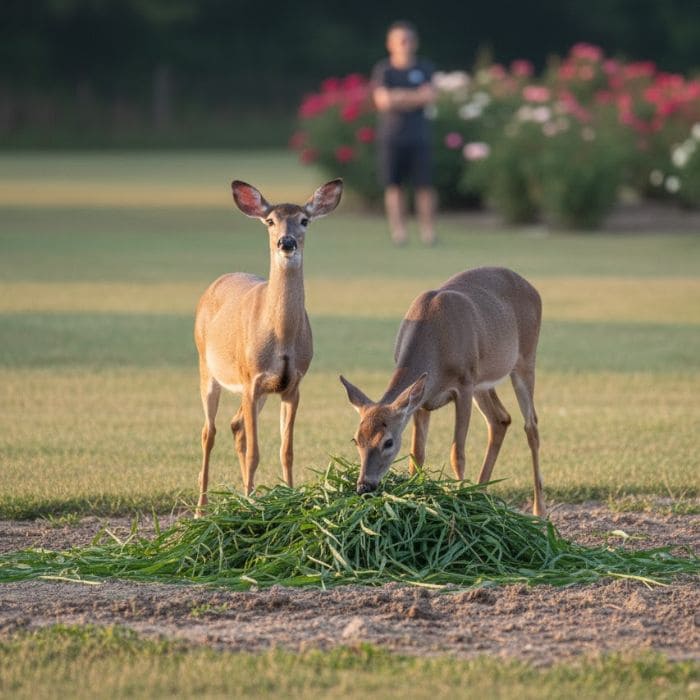
It did not take long. One deer noticed the movement first. Its head lifted, ears forward. The second followed. They paused for a moment, bodies still, deciding whether I was a threat.
When they realized there was no danger, only food, they walked toward the grass slowly. They began eating again, but this time the urgency was gone. Their chewing slowed. They lifted their heads between mouthfuls. The roses were left alone.
After a while, they finished, drifted back toward the tree line, and disappeared as quietly as they had come.
What Was Left Behind
When they were gone, I walked through the garden. Yes, there was damage. Some rose stems were stripped clean. A few buds were gone. But the bushes themselves were still standing. The coneflowers held their shape. The loss felt contained, not careless.
Living here means accepting that the garden is part of a larger system. Some days, it feeds bees and butterflies. Some days, rabbits. Sometimes children. And sometimes, two hungry deer passing through from the woods.
I could have chased them away. Instead, I chose to share what I could and protect what mattered most.