
My Cat Ate Asian Lilies In My Garden
You already know my Persian cat. He is gentle in a way that feels old-souled, calm, obedient, never rushing ahead of me. Every early morning, just as the light begins to soften the edges of the garden, he follows me outside as if it is part of his duty. He walks close to my legs,…

You already know my Persian cat. He is gentle in a way that feels old-souled, calm, obedient, never rushing ahead of me.
Every early morning, just as the light begins to soften the edges of the garden, he follows me outside as if it is part of his duty.
He walks close to my legs, pauses when I pause, and settles quietly whenever I kneel to look at something more closely. Those walks have always felt safe, familiar, almost sacred.
That is why what happened last week unsettled me so deeply that I felt I had to share it immediately, before the feeling faded or softened.
A Gift That Traveled a Long Way
Last year, my best friend Harper traveled through several countries in Asia.
She knows how much flowers matter to me, not just for how they look, but for the stories they carry, so when she came back, she brought me a gift she had chosen carefully. It was a full box of Asian lily bulbs, wrapped in layers of paper, each variety separated and labeled by hand.

The bulbs were unlike anything I had planted before.
Large, firm, almost heavy in the palm of my hand. Some were pale cream with faint pink lines, others slightly golden, all of them tightly layered and smelling faintly of dry earth and travel.
Harper told me they came from local growers, not something bought in a shop, and that these lilies were known for tall stems, large open blooms, and a scent that became stronger as the day warmed.
Waiting for What Takes Time
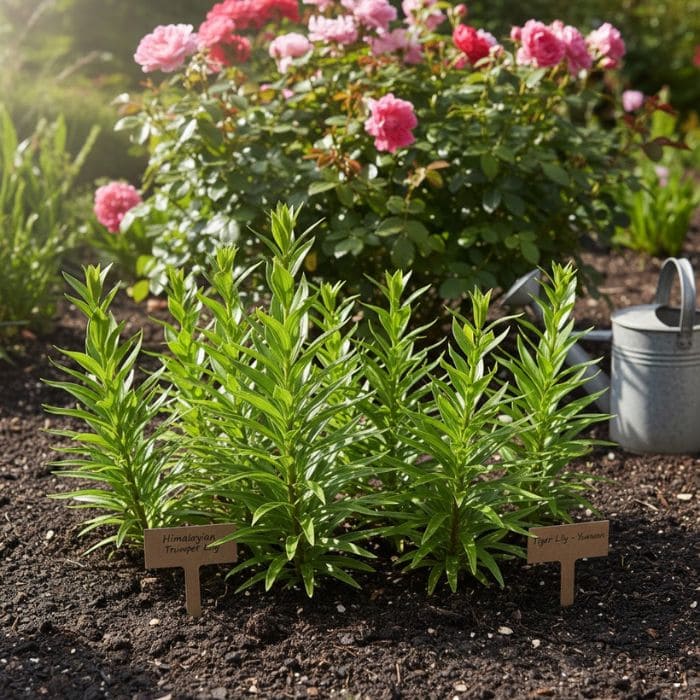
I planted the lily bulbs in early spring, choosing a spot not far from the roses but slightly set apart, where the soil stayed cool and the morning sun reached gently.
I measured the spacing carefully, about twelve inches between each bulb, planted them deep, watered them slowly, and then waited.
Lilies do not rush. Weeks passed with nothing visible. Then more weeks. Eventually, thin green shoots appeared, followed by long narrow leaves that looked healthy and strong.
Still, there were no buds for a long time. I told myself they were adjusting, learning the land, finding their rhythm in Willow Bend.
The Morning Everything Shifted
Last week, during one of those early walks, my cat followed me as usual. He brushed past my ankles while I checked the roses, sat quietly while I trimmed a spent bloom, then wandered a little ahead toward the lilies.
I noticed, but I did not worry. He had always been curious, never destructive. When I finished and turned back toward the house, I called him softly.
“Meow…”
There was no answer.
I called again, louder this time, still nothing.
That silence felt wrong in a way I cannot fully explain. The garden suddenly felt too quiet.
What I Found Near the Lilies
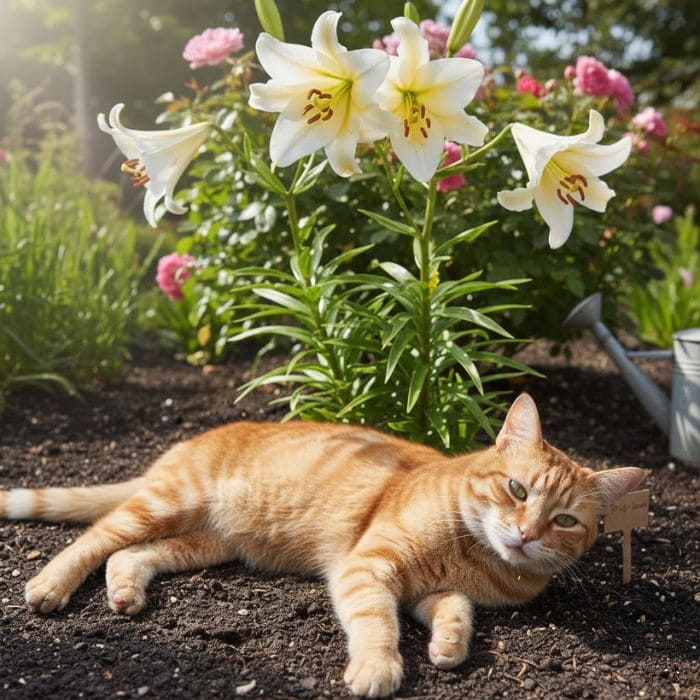
As I walked toward the lily patch, my chest tightened before I even reached it.
My cat was lying on the soil near the base of the plants, not curled or resting the way he usually does. His body was stiff. His breathing shallow and uneven.
There was saliva around his mouth, and his eyes were half-open, unfocused, not following me the way they always do.
And above him, three lilies had finally bloomed. They were tall, almost four feet high, with wide open petals, pale and luminous in the morning light. Beautiful in a way that felt cruel in that moment.
I saw bite marks along the edges of the petals, small but unmistakable. Bits of pollen clung to his fur. My heart dropped.
The Fear That Took Over
I did not hesitate. I wrapped my cat in the nearest towel, lifted him carefully, and carried him straight to the car.
The drive to the pet hospital felt endless, even though it was not far. My hands shook on the steering wheel. I kept talking to him quietly, telling him to stay with me, even though I did not know if he could hear me.
At the hospital, the moment I said “lilies,” everything changed. The veterinarian moved faster. Questions came quickly. How long ago. How much contact. Whether he had chewed or swallowed.
We were lucky. Because I found him quickly, and because he had not ingested much, they were able to treat him in time. He stayed under observation, received fluids, and slowly began to respond.
By evening, he was stable. I sat in the waiting room longer than I needed to, letting the fear settle out of my body one breath at a time.
Choosing Protection Instead of Removal

When we came home, I stood in the garden for a long time. The lilies were still there, standing tall and calm, untouched by what they had caused.
I could not bring myself to remove them. They are rare, beautiful, and irreplaceable. I knew I would not find them again.
Instead, I chose protection. The very next day, I built a barrier around the lily patch. I used untreated cedar wood for the frame, four corner posts about three feet high, sunk firmly into the ground.
Around it, I attached fine galvanized wire mesh, tight enough that my cat could not push through or reach the plants. The mesh rises about thirty inches, tall enough to prevent jumping but open enough to allow air, light, and insects to pass freely.
I added a small hinged gate so I could step inside when needed, always closing it behind me. The barrier does not hide the lilies. It simply sets a clear boundary, one that protects without taking away beauty.