Our Garden Opened Its Gates to Welcome Students
Last week, our garden experienced something it had never held before in this way, it welcomed children. Not just visitors passing by, but a full group of young students arriving with questions, energy, and eyes wide open to everything growing around them. From the moment we received the message asking if a visit might be…
Last week, our garden experienced something it had never held before in this way, it welcomed children.
Not just visitors passing by, but a full group of young students arriving with questions, energy, and eyes wide open to everything growing around them.
From the moment we received the message asking if a visit might be possible, I knew this would not be an ordinary day for Willow Bend.
We were contacted nearly a month in advance by a primary school in Ohio, asking if their students could visit a working countryside garden during their spring learning trip.
After a long conversation and a few exchanged letters, we agreed, and suddenly the garden had a date on the calendar.
The Announcement at the Gate
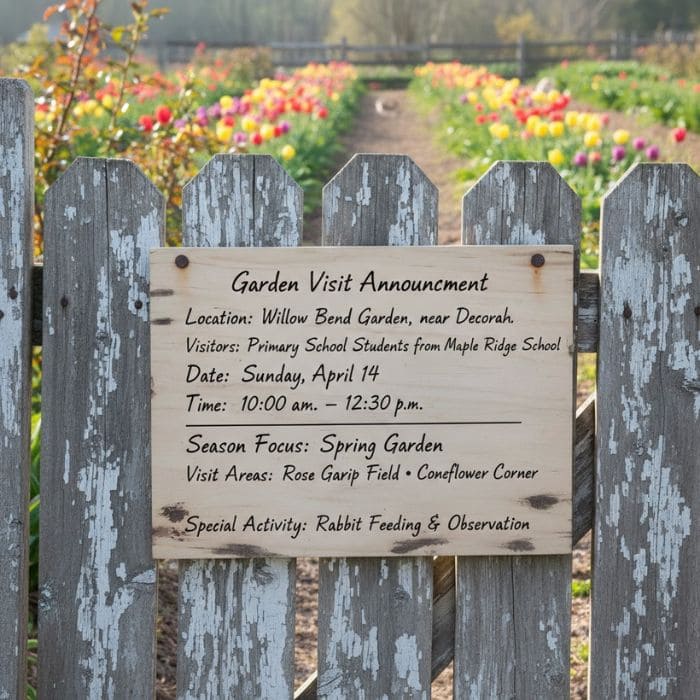
Three days before the visit, we placed a sign at the wooden entrance gate, handwritten carefully on a pale board my grandfather once used for labeling beds.
Garden Visit Announcement
Location: Willow Bend Garden, near Decorah
Visitors: Primary School Students from Maple Ridge Elementary School
Date: Sunday, April 14
Time: 10:00 a.m. – 12:30 p.m.
Season Focus: Spring Garden
Visit Areas: Rose Garden · Tulip Field · Coneflower Corner
Special Activity: Rabbit Feeding & Observation
My grandmother stood beside me while I tied the sign in place. She adjusted it slightly so it faced the morning light and nodded once, as if approving both the angle and the idea itself.
Preparing the Garden for Young Feet
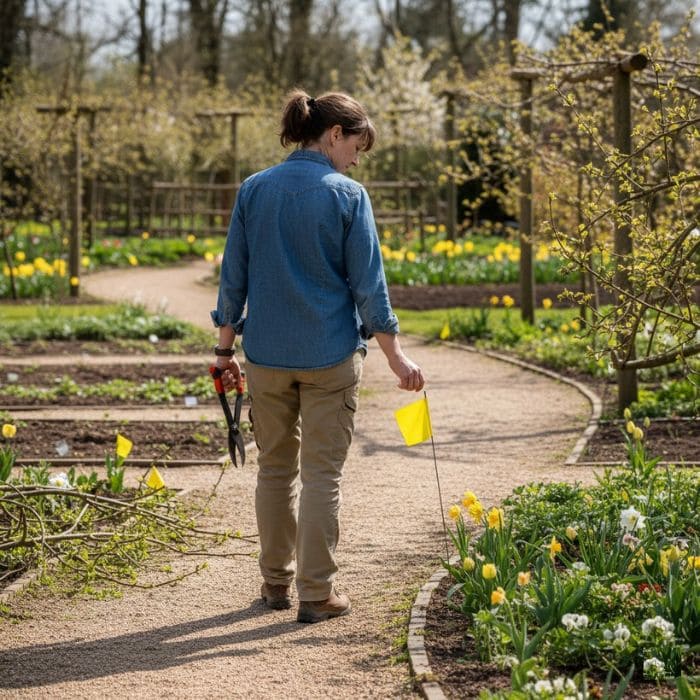
Once the visit was confirmed, everything slowed down in a different way. Preparation was not about decoration, but safety and clarity.
I walked the garden every morning, checking paths, removing stones, trimming low branches, and marking areas where children should not step.
We placed small wooden signs near delicate plants and laid straw along muddy edges so shoes would not slip.
I planned the route carefully. We would start with the rose garden, where scent and history speak first.
Then we would move to the tulip field, where color does the talking. The coneflower corner would come next, full of movement and sound.
And finally, we would end near the rabbit coop, where patience and gentleness would matter most.
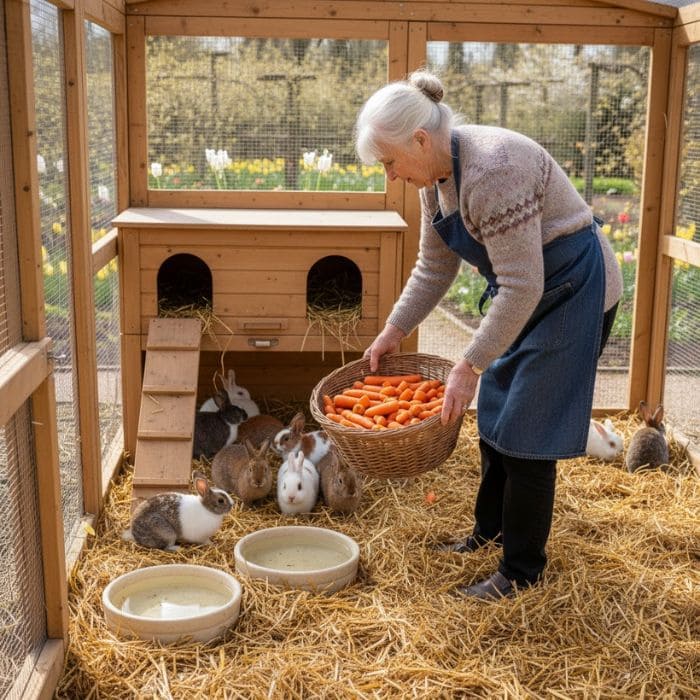
My grandmother prepared quietly in her own way. She cleaned the rabbit coop, added fresh straw, filled water bowls, and set aside a basket of carrots cut into short pieces, just the right size for small hands to hold safely.
By Saturday evening, everything was ready.
The Bus on the Narrow Road
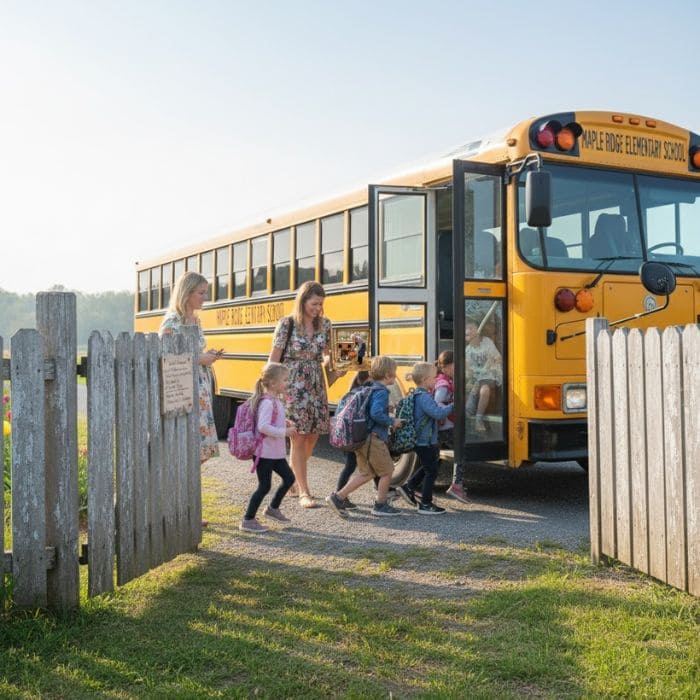
Sunday morning arrived calm and cooperative. The sky was pale blue, the air cool but soft, the kind of spring weather that feels generous.
Around ten o’clock, I heard the sound before I saw it, a bus slowing as it turned onto the narrow country road.
When it stopped near the gate, the door opened and voices spilled out immediately.
“Is this the garden?”
“Look how big it is.”
“I smell flowers already.”
A teacher stepped down first, followed by a woman who introduced herself as Mrs. Collins. She thanked us repeatedly and said the children had been talking about gardens all week.
“They think roses grow on trees,” she said quietly, laughing.
My grandmother stood beside me, hands folded, watching the children gather themselves before entering.
Learning by Walking
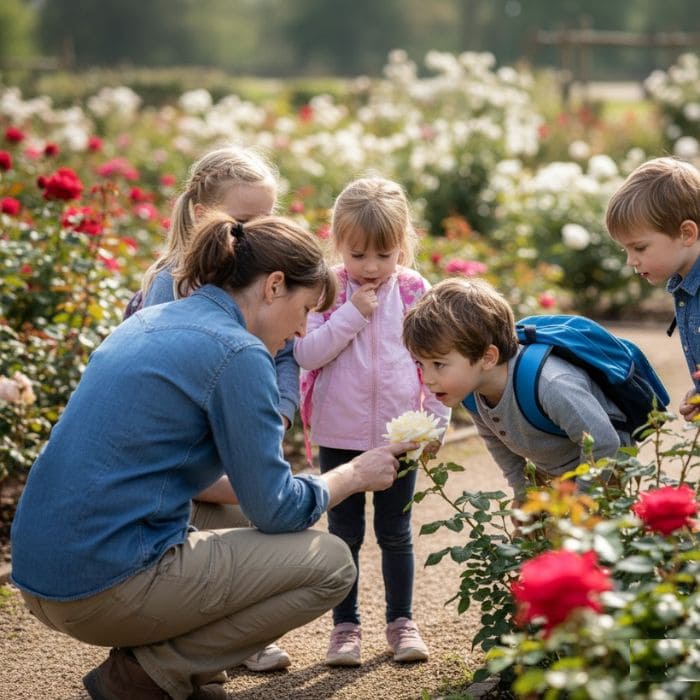
We began slowly. I asked the children to walk, not run, and to use their eyes before their hands. To my surprise, they listened carefully.
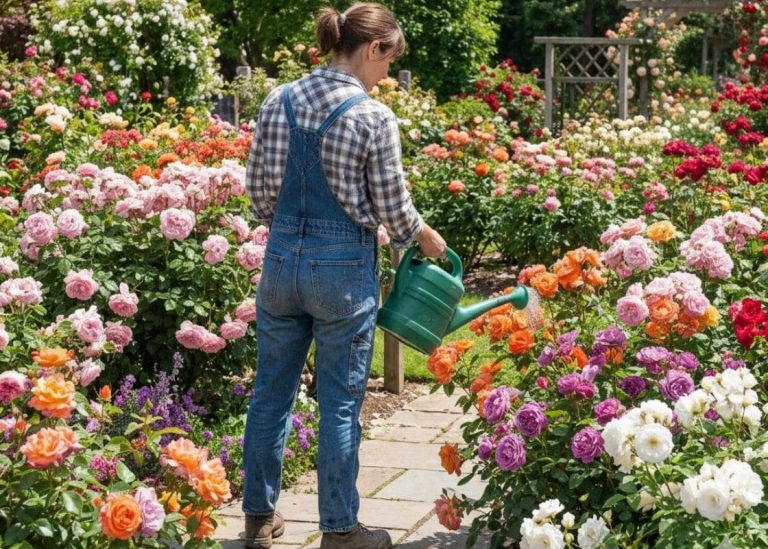
In the rose garden, I showed them how different roses smell different, even when they look similar.
One boy leaned in and said, “This smells like old books and candy.” A girl asked why some roses had thorns and others did not.
My grandmother explained that protection sometimes grows alongside beauty.
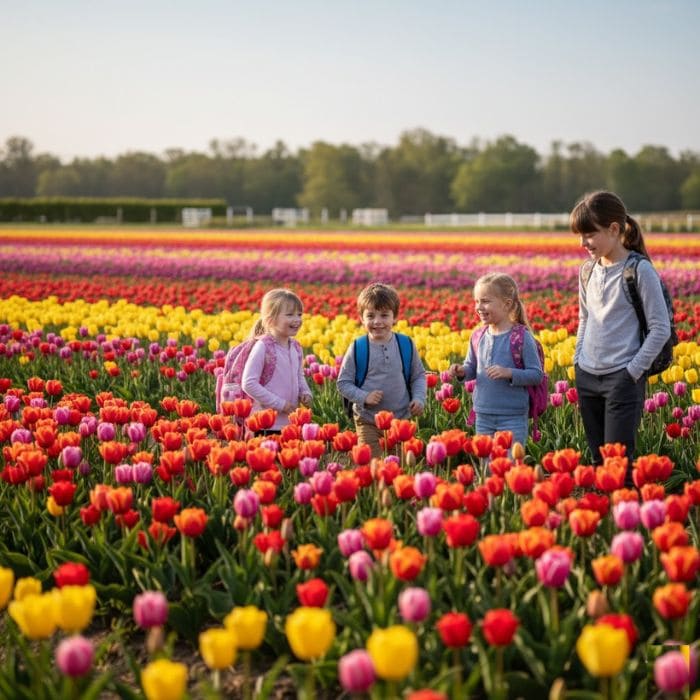
In the tulip field, the children stopped without being told. Rows of color held them still. Reds, yellows, pinks, whites, and deep purples stretched across the land.
I explained how tulips sleep underground all winter and wait for the cold to leave.
One child raised her hand and asked, very seriously, “Do they know when it’s time?” I told her they listen to the soil.
At the coneflower corner, the bees took over the lesson. Butterflies moved in and out of the blooms while we stood quietly.
I pointed out the wide centers and strong stems. One child whispered, “They look like tiny airports,” and everyone nodded as if that explained everything perfectly.
The Rabbits and the Quietest Excitement
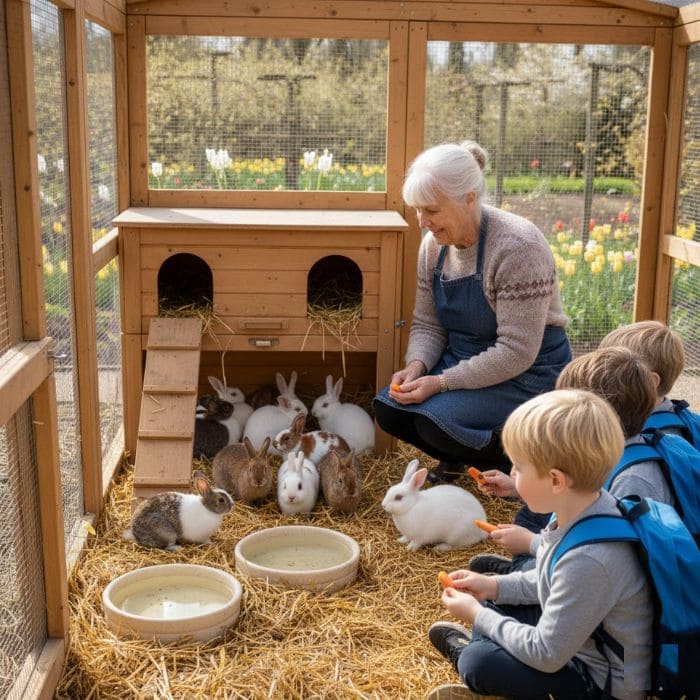
Then we reached the rabbit coop. “Are they real?” someone asked. Very real.
The rabbits stayed calm, noses moving, ears twitching. My grandmother showed the children how to sit down and wait. No grabbing, no chasing, just stillness.
She explained that animals come closer when they feel safe. Then she opened the basket of carrots.
Each child received one small piece. My grandmother showed them how to hold it flat in their palm, fingers curled slightly underneath. At first, nothing happened, then one rabbit hopped forward, slowly, cautiously, and took a bite.
The reaction was instant but quiet. “They’re eating from me,” a boy whispered, frozen in place.
One rabbit moved from child to child, nibbling gently. Another stayed back, watching. My grandmother explained that even animals have preferences and moods.
“I didn’t know gardens had animals,” someone said.
“They do,” my grandmother replied. “When you take care of them properly.”
After the Bus Left
When the visit ended, the children thanked us one by one. Some waved from the bus windows. Others pressed their faces to the glass, still looking back at the garden.
After the bus disappeared down the road, the garden felt unusually quiet. Not empty, but full in a different way. Footprints marked the paths. The rabbits settled back into their routine. Bees returned to their work.
That afternoon, my grandmother and I walked the garden together, slowly restoring its usual rhythm. After a long pause, she said, “They will remember this longer than they think.”
Last week, our garden welcomed questions, laughter, carrots, and careful hands. Instead of losing its peace, it shared it. And that felt like a true honor.