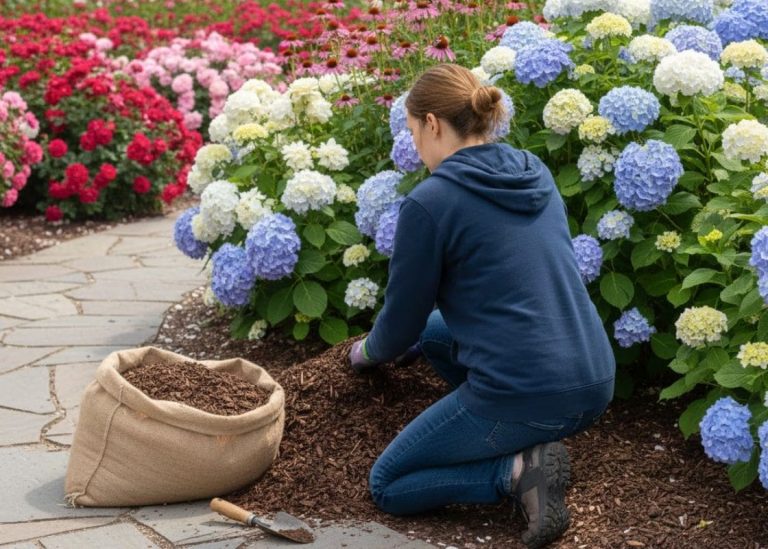
People Say I’m Good at Gardening, But It’s not True
Many people leave comments on my blog saying things like, “You are so good at gardening,” or “Everything you grow looks perfect.” I always pause when I read those words. I feel grateful, of course, but I never accept them without a quiet hesitation. Gardening is not a series of uninterrupted successes, no matter how…
Many people leave comments on my blog saying things like, “You are so good at gardening,” or “Everything you grow looks perfect.”
I always pause when I read those words. I feel grateful, of course, but I never accept them without a quiet hesitation.
Gardening is not a series of uninterrupted successes, no matter how it looks from the outside. It is built from repeated observation, small misjudgments, corrections, and moments when things simply do not work, even when you care deeply.
This story is one of those moments. I want to tell it clearly and honestly, because I hope no one, especially gardeners who love their plants as much as I do, repeats the same mistake without understanding why it happens.
The Lantana I Did Not Intend to Bring Home
Near the hanging orchids I wrote about earlier, there is a section of the garden where pots catch filtered light and moving air throughout the day.
That area still had a few empty hooks, and I had been thinking about adding something brighter there for summer, something that could bring warmth and color without demanding constant attention.
Last week, my grandmother and I drove into town to buy a few ordinary kitchen items.
We were not planning to buy plants. But as always, when we passed the local market, my attention drifted toward the small floral shop near the corner.
It is one of those shops that changes daily, with plants appearing unexpectedly, often arranged outside in the sun. I slowed down, then stopped.
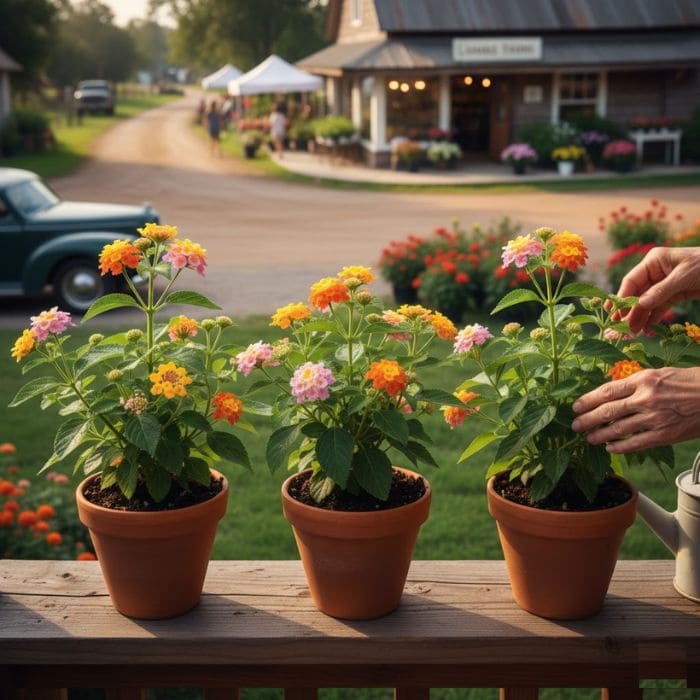
Several pots were lined up near the entrance, filled with clustered flowers in orange, yellow, and soft pink. The leaves were glossy and healthy, the stems upright and firm.
The shopkeeper noticed me looking and said, very casually, that they were Lantana, strong plants, easy to grow, perfect for summer heat.
I bought three pots, thinking I would test them first. If they grew well, I planned to return and buy more to hang along the porch. They looked like a safe choice, and I brought them home with quiet confidence.
Summer Heat and a False Sense of Care
The next day, summer arrived fully. The air felt heavy, the sun stayed high for hours, and the soil dried quickly across the garden. Even established plants showed signs of stress by midday.
I told myself what many gardeners tell themselves in moments like that, that the garden needed more water, especially new plants still adjusting.
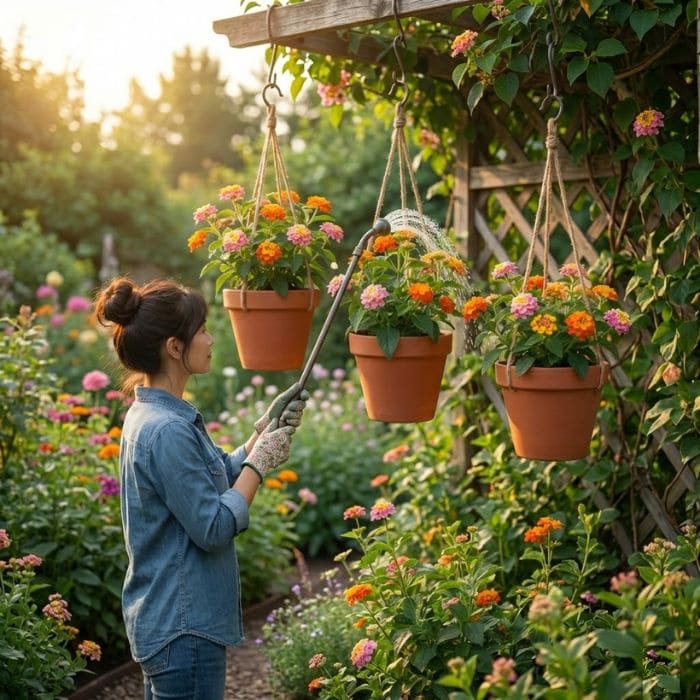
I took out the long hose and watered deeply. When I reached the Lantana pots, I hesitated briefly, then watered them thoroughly, watching water flow freely from the drainage holes. That felt reassuring.
Later that afternoon, I watered again, convinced that the heat justified it. By evening, I watered a third time, believing that extra care would protect them.
I repeated this routine the next day. And the day after that.
Three days in a row, I watered those Lantana pots heavily, about three times a day, soaking the soil each time.
I never paused to check the weight of the pots. I never questioned whether the plants wanted what I was giving them. I only focused on the heat and my own sense of responsibility.
The Subtle Signs I Missed
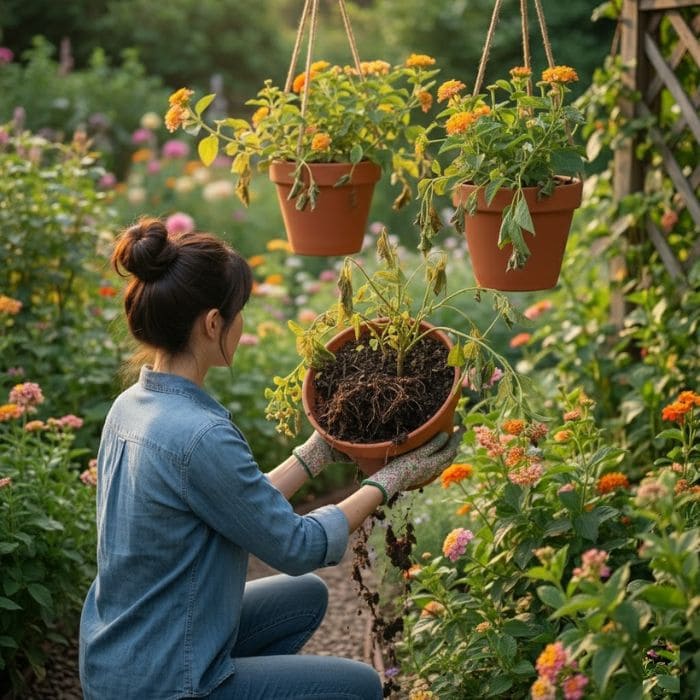
On the fourth morning, something felt wrong. The leaves did not look dry, but they had lost their brightness. The stems no longer held themselves firmly. By afternoon, several had begun to droop, not from lack of water, but from too much of it.
I touched the soil and felt how heavy and cool it was, holding moisture without release. A quiet unease settled in before I even lifted the pot.
When I tipped the first one gently, the smell told me the truth before my eyes did. The roots were dark, soft, and breaking apart at the slightest touch.
I checked the second pot, then the third, hoping for a different result, but all three showed the same damage. Root rot had taken them completely.
Understanding What I Had Overlooked
Lantana is often described as an easy plant, but easy does not mean forgiving of everything. It is drought-tolerant, not water-loving. It prefers soil that dries out between waterings, especially in containers.
Hanging pots make this even more important, because excess moisture can collect and suffocate roots quickly if the soil never has a chance to breathe.
In my attempt to protect these plants from summer heat, I had done exactly what they could not tolerate.
I treated them like orchids and hydrangeas, plants that appreciate consistent moisture. Lantana survives because it can handle dryness, not because it endures excess care.
My grandmother looked at the wilted pots quietly and said only that it was too much love. She did not need to explain further.
Sitting With the Failure
That evening, I removed the plants carefully and cleaned the hooks where they had hung. I stood there for a while, looking at the empty space, feeling disappointed but not embarrassed.
Gardening has a way of correcting confidence gently but firmly. It reminds you that knowing many things does not mean you know everything.