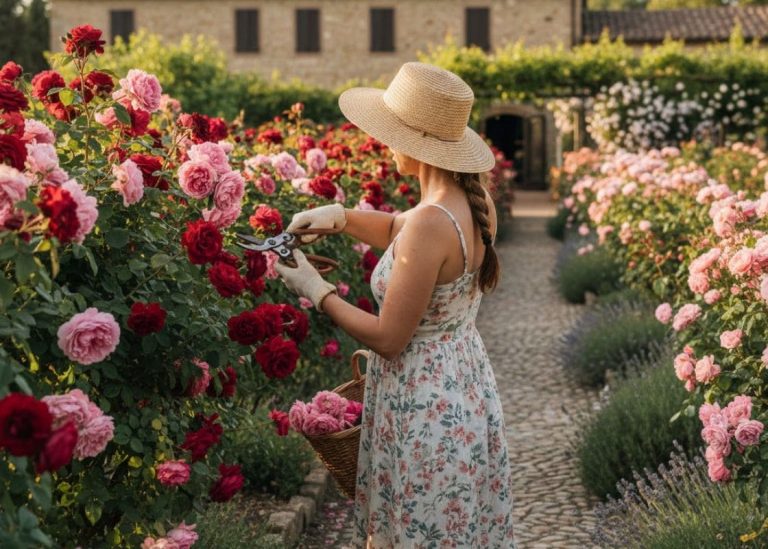
Some Flower Borders In My Garden
For the first few years, I did not think much about borders at all. I planted flowers where the light felt right, watered them, supported them when they leaned, and let them grow into each other freely. The garden was healthy, and that felt like enough. I was more focused on keeping things alive than…
For the first few years, I did not think much about borders at all. I planted flowers where the light felt right, watered them, supported them when they leaned, and let them grow into each other freely.
The garden was healthy, and that felt like enough. I was more focused on keeping things alive than on how everything looked together.
Over time, though, I started to notice something. Some areas felt finished, while others felt unfinished, not because the plants were struggling, but because the edges were unclear. Paths blurred into beds.
Certain flowers disappeared visually because there was nothing to frame them. I realized I did not need borders everywhere, but some areas were asking for a little structure.
So I began adding borders slowly, one area at a time, only where they made sense. I still leave many sections open, especially where plants spill naturally into each other.
The Coneflower Area and the Old Bricks
The first place I worked on was the coneflower area. Coneflowers have a strong, almost old-fashioned presence.
They stand upright, they last through heat, and they attract bees and butterflies without needing attention. I wanted their space to feel grounded, not polished.
I chose old bricks for that border. I found them by accident while browsing online one evening, then realized a small shop nearby carried reclaimed bricks from old buildings.
When I saw them in person, I knew they were right. The edges were worn, the surfaces uneven, and no two bricks looked exactly the same. They felt like they already had a history.
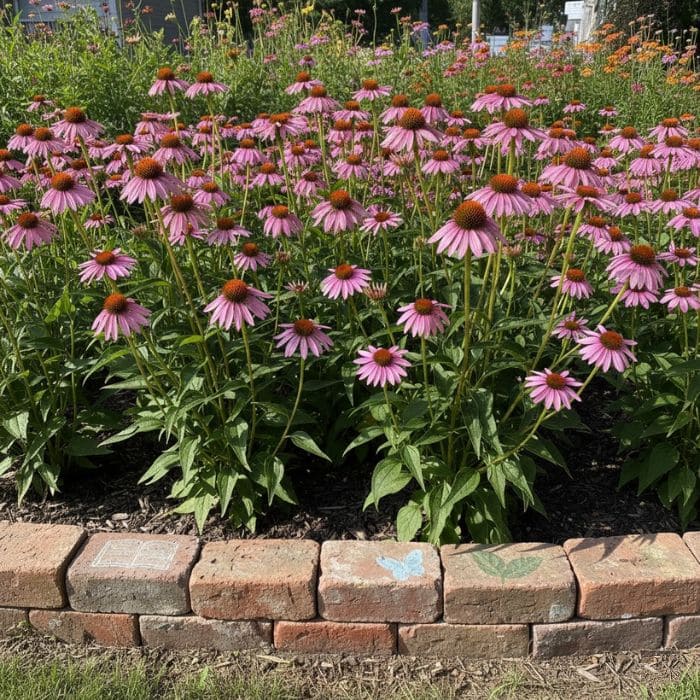
I laid them low, just one brick high, pressing them slightly into the soil so they looked settled, not placed.
Before setting them all down, I painted a few by hand. Nothing bright. Just simple shapes, a book outline, a small butterfly, or even a leaf. I did not want them to stand out too much, only to reward someone who looks closely.
Now, when the coneflowers bloom, their tall stems rise out of that quiet, brick-lined space, and the contrast feels right. Strong flowers, gentle edges.
Roses and the Need for Clear Lines
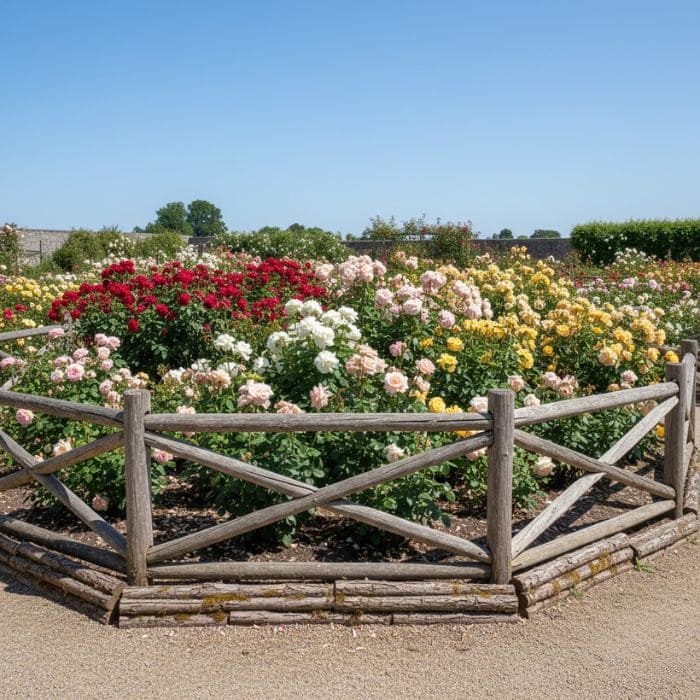
The rose area is different. Roses take up a large part of the garden, and they need more guidance, especially with visitors passing through and wildlife moving freely.
After the day deer ate through several bushes, I knew I needed something that would suggest a boundary without turning the space into a barrier.
I added a simple cross-style wooden fence around sections of the rose beds. The wood is untreated and left to weather naturally.
The fence is not tall, just high enough to signal that this area is intentional and cared for. It does not stop deer completely, but it slows them down and makes the roses feel less exposed.
Along the inner edge, closer to the soil, I added a second, quieter border using logs.
The Log Border From What We Already Had
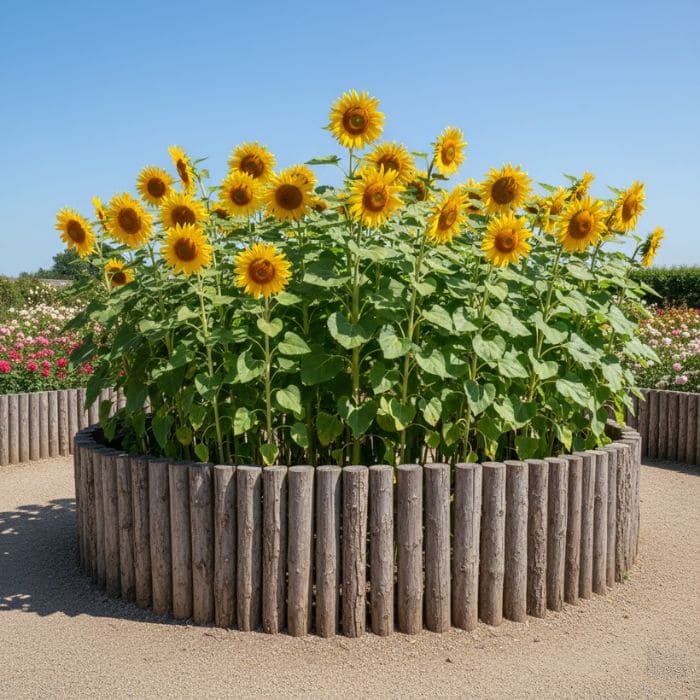
Behind our shed, there are always leftovers. Small logs, trimmed branches, pieces saved because they might be useful someday.
I cut several logs to similar lengths, about twelve to fifteen inches high, with flat bottoms so they would stand securely.
I placed them close together around the sunflower area near the roses, pressing them slightly into the ground. They are not treated or polished. The bark is still rough. Over time, they have darkened and softened, blending into the soil.
I like this border because it feels honest. It is made from what we already had. It does not try to be decorative. It simply holds space.
Sunflowers grow tall and bold inside that circle, and the log border keeps their energy contained without limiting them.
Where Rocks Are Enough
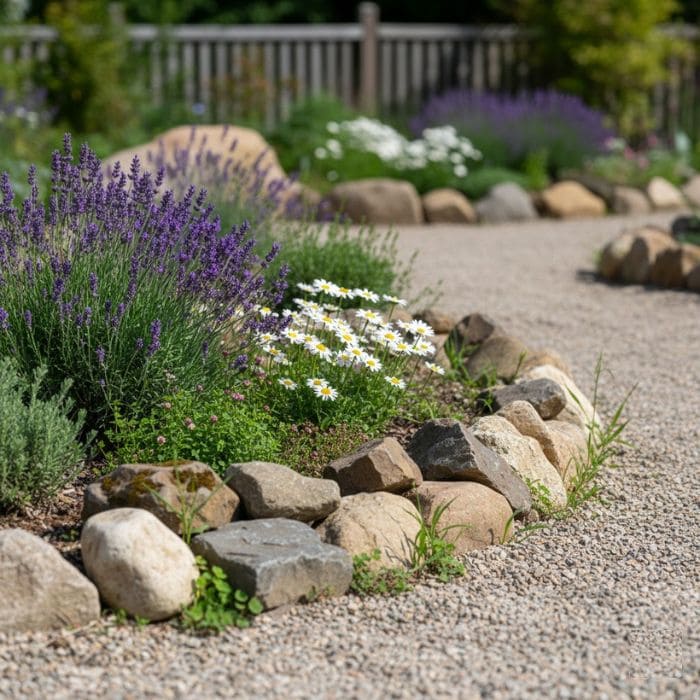
In some parts of the garden, I use nothing but rocks. Just stones collected over time, different sizes, arranged loosely around smaller flower beds.
I use this approach for plants that do not need protection or definition, only a subtle edge to separate them from paths such as lavender, small daisies or low-growing herbs.
The rocks sit where they fall naturally. I do not align them perfectly. I let gaps remain. Grass grows between some of them, and I leave it that way. These borders are more about suggestion than separation.
What Borders Mean to Me Now
I still believe not every area needs a border. Some parts of the garden are meant to blur and mix and change shape with the seasons.
But where a plant has strong character, or where a space needs clarity, a simple border helps everything else make sense.
I build them to support it, to help the eye rest, and to give each area its own quiet identity.