The Flower That Never Stays the Same in My Garden
There is one flower in my garden that I never treat as background. Even after all these years, I still pause when I walk past it, checking its color, its weight, the way the light settles on its petals. That flower is hydrangea. I first learned to pay attention to hydrangeas when I was still…
There is one flower in my garden that I never treat as background. Even after all these years, I still pause when I walk past it, checking its color, its weight, the way the light settles on its petals. That flower is hydrangea.
I first learned to pay attention to hydrangeas when I was still in school. My biology teacher, Mrs. Eleanor Whitman, used to bring fresh flowers into the classroom whenever she could. One spring morning, she placed a large hydrangea bloom on her desk and said something that stayed with me longer than most lessons.
“Hydrangeas,” she said, “are honest flowers. They don’t pretend. They show you exactly what they are given.”
She explained that hydrangeas symbolize understanding and emotional awareness because they respond directly to their environment. Their color is not fixed. It changes depending on the soil beneath them. At the time, I thought it sounded more poetic than practical.
I did not know then that years later, I would build a whole section of my garden around that idea.
Giving Hydrangeas the Space They Deserve
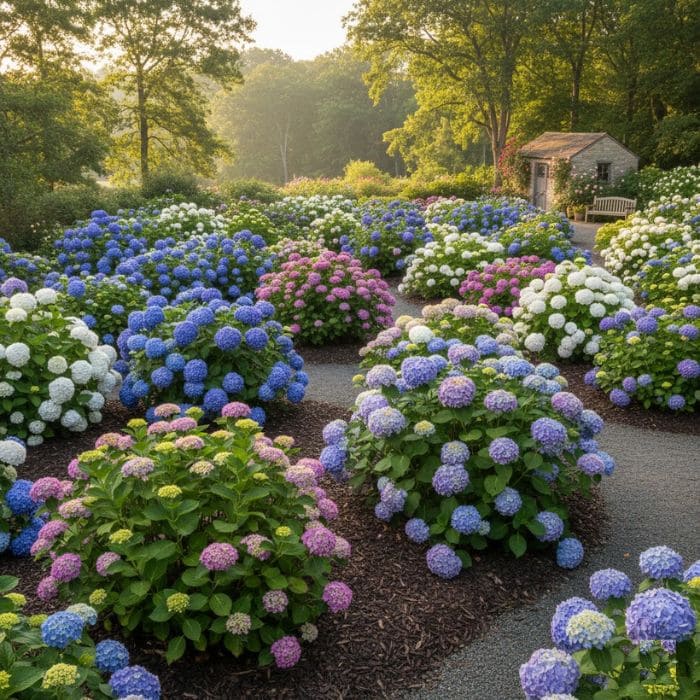
When my grandmother and I began expanding the garden, I chose a large area specifically for hydrangeas. Not just a border, not a corner, but a space where they could grow wide and full without competing for attention.
Hydrangeas need room. Their leaves are broad, their stems thick, and their blooms heavy enough to bend branches if they are crowded.
I planted them where they receive gentle morning sun and protection from harsh afternoon heat. The soil there stays cooler and holds moisture longer, which hydrangeas need.
Over the years, the shrubs have grown into strong, rounded forms, some reaching nearly chest height, their blooms as large as my hands spread wide.
The First Color They Chose: Purple
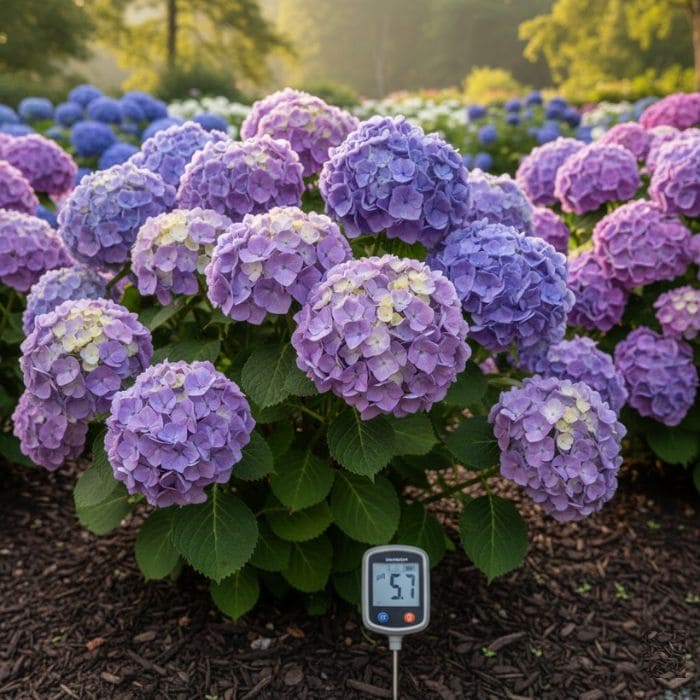
One of the most surprising things about hydrangeas is that their color is not a mystery if you understand the soil.
Right now, the soil in my main hydrangea area measures between pH 5.5 and 6.0, which I test every season using a simple soil meter. This slightly acidic range produces purple blooms in most hydrangea varieties.
And that is exactly what I see. The flowers open pale at first, almost washed with color, then slowly deepen into layered shades of violet and lavender.
Some blooms lean more blue, others more pink, depending on where they sit in the bed. No two plants look exactly the same, even though they grow side by side.
Wanting to See Blue With My Own Eyes
Blue hydrangeas have always fascinated me. They look almost unreal when the color is strong and clear, like they belong to a different climate or a different world. I wanted to see if I could guide my plants there, not quickly, not forcefully, but carefully.
To encourage blue blooms, the soil needs to be more acidic so aluminum becomes available to the plant roots. I started slowly.
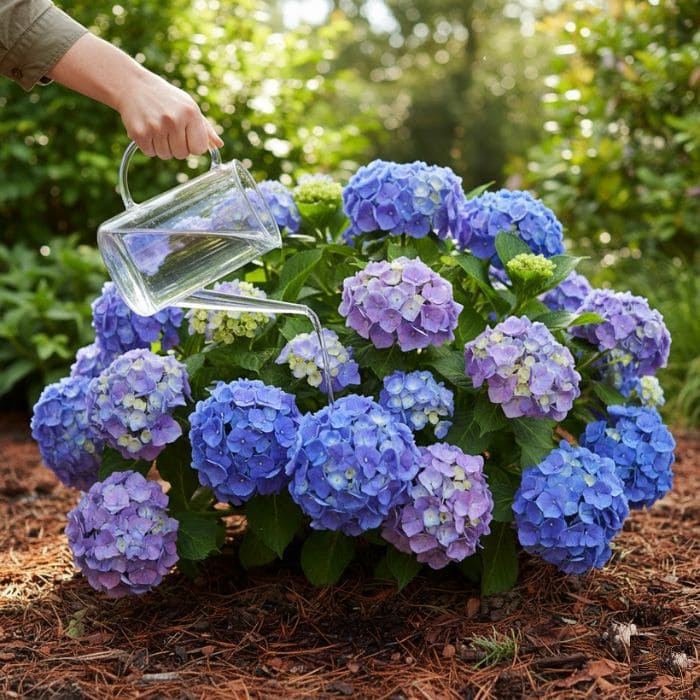
I used aluminum sulfate, dissolving small amounts in water and applying it around the base of the plants every few weeks during the growing season. I avoided touching the stems directly and watered deeply afterward.
I also mulched with pine needles and composted bark, which naturally help lower soil pH over time. I watched the plants closely for stress. The leaves stayed green. Growth stayed steady.
The next blooming cycle showed the change. Flowers opened cooler in tone, shifting from purple toward blue.
Some blooms were fully blue. Others showed blended colors, half-purple and half-blue, like a quiet transition. That mix became my favorite stage.
Creating a Pink Corner for My Grandmother
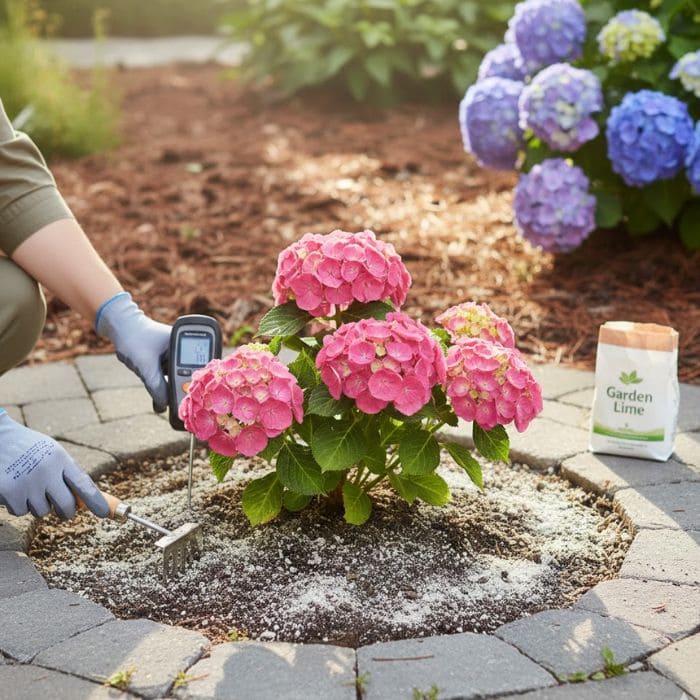
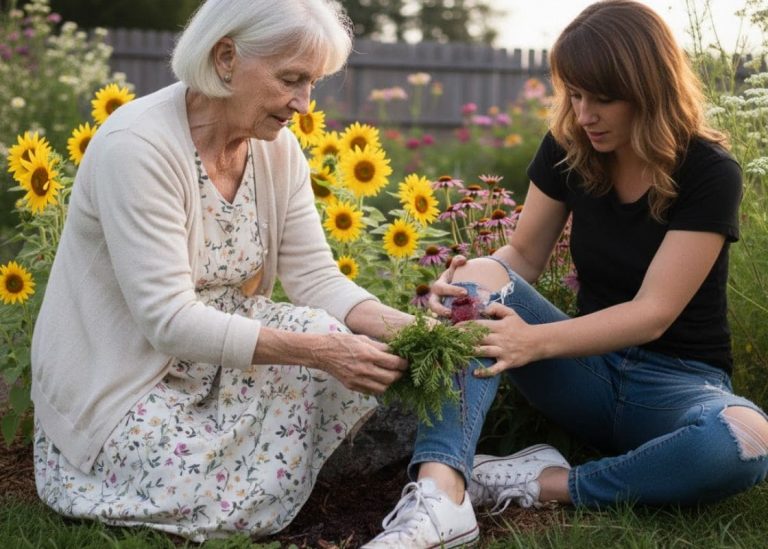
My grandmother, however, loves pink hydrangeas. She says they feel warmer, more welcoming, and closer to the gardens she remembers from her younger years. So I decided to dedicate a separate corner just for her.
I chose a small section on the west side of the hydrangea area, where the light is softer in the afternoon and the soil drains a little faster. I followed guidance I had saved from several gardeners on Instagram.
To raise the soil pH and encourage pink blooms, I added garden lime in measured amounts, mixing it gently into the top layer of soil and watering thoroughly.
I did not rush this process. Raising pH too quickly can shock plants. I adjusted slowly over months, testing regularly. The result was worth the patience.
The blooms opened in soft blush tones, then deepened into dusty pink as they matured. Some leaned almost rose-colored by the end of the season. My grandmother noticed immediately.
“These are mine,” she said, smiling, touching one gently.
Living With a Flower That Responds
What I love most about hydrangeas is not just that they change color. It is that they respond clearly and honestly.
They show you the result of your care without exaggeration. If the soil shifts, they tell you. If conditions change, they reflect it.
They have taught me patience. Color does not change overnight. They have taught me attention, small details matter.
Every year, my hydrangea section looks a little different. Purple where the soil stays balanced. Blue where I gently guide it. Pink where my grandmother prefers warmth. Sometimes, all three colors appear on the same plant.