The Man Who Came Looking for Old Things
Two days ago, a man arrived at our garden in a way that felt unplanned but not accidental. He came late in the morning, when the light is clear and steady, driving a dark, dusty truck that had clearly covered many miles before turning onto our narrow road. He parked carefully near the gate, stepped…
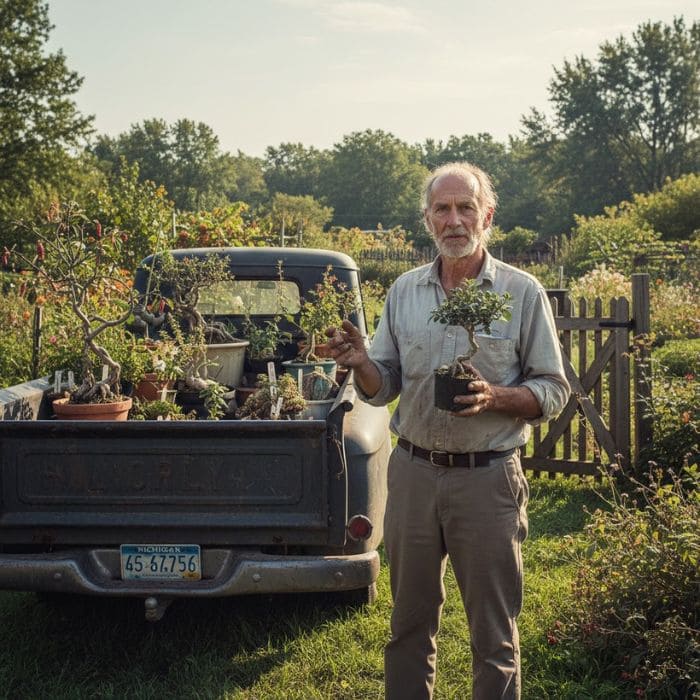
Two days ago, a man arrived at our garden in a way that felt unplanned but not accidental. He came late in the morning, when the light is clear and steady, driving a dark, dusty truck that had clearly covered many miles before turning onto our narrow road.
He parked carefully near the gate, stepped out slowly, and stood for a moment as if he wanted to feel the place before entering it.
He told me he was from Michigan. He was tall, broad-shouldered, and lean in the way people become when they spend more time outdoors than indoors.
His hair was thinning and gray, pulled back loosely, and his face was weathered, not from age alone, but from years of sun and wind.
What I noticed most were his hands. They were rough, scarred in small places, with dirt settled into lines that never fully wash out. These were the hands of someone who digs, lifts, and handles living things every day.
He introduced himself simply and told me he was a seller, but not in the way people usually mean. He does not work with catalogs or greenhouses full of identical pots.
He travels, slowly, collecting ancient varieties of trees, plants, and flowers, especially ones that have survived without being reshaped by modern breeding. He said he looks for plants that still carry memory.
How He Found His Way Here
What surprised me most was how he found our garden at all.
Before coming here, he had been traveling through Ohio, stopping in small towns, sitting in quiet coffee shops, listening to conversations that drifted around him.
In one of those cafés, the same one I often drive to when I meet friends, he sat beside an elderly man at the counter. They talked about weather, then about gardens, then about the kinds of plants that no longer appear in stores.
The old man laughed and said there was a garden in Iowa he should see, one cared for by a woman and her grandmother, a place where roses older than most people were still growing freely.
“She won’t sell you anything,” the old man told him. “But you should see it anyway.”
Walking the Garden Together
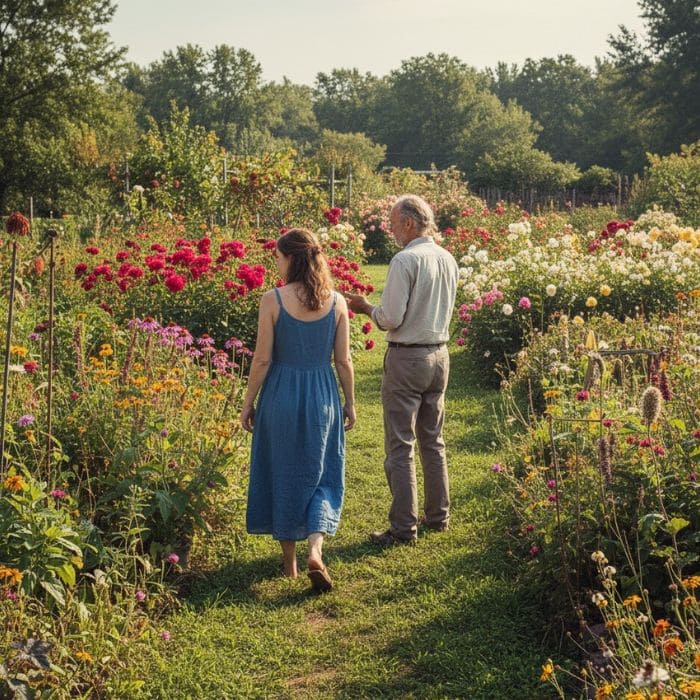
Anyone who comes to our garden with respect is welcome, so I invited him in. We walked slowly, because speed does not belong in this place.
He did not rush ahead or try to lead. He followed, stopping often, kneeling to examine soil, touching fallen petals, studying stems without interrupting.
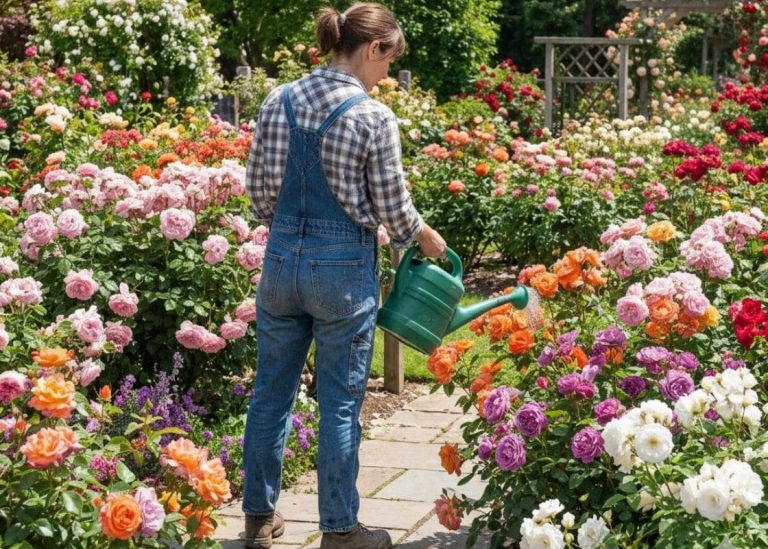
In the rose garden, he barely glanced at the newer varieties. His attention moved past them politely, almost automatically. It was the older roses that held him.
He asked a few questions, but when he did, they were thoughtful ones. How long had they been here. Whether they were grafted or grown on their own roots. How they handled winter without protection.
We moved through the tulip area, now mostly finished for the season, and the coneflower corner, alive with bees. He nodded slowly, taking it all in.
“These plants haven’t been forced,” he said at one point. “They grew because someone let them.”
The Conversation About Old Roses
When we returned to the oldest section of the rose garden, his pace slowed noticeably. He stopped speaking altogether for a while, as if words would only interfere with what he was trying to understand. Then he stopped in front of one rose and did not move.
This rose has been here longer than I have been alive. The bush spreads wide, nearly six feet across, its structure loose and confident.
The stems are thick and woody, darkened with age, marked by scars from winters, pruning, and time itself. The base is heavy and gnarled, rooted deep, so deep that even drought years barely trouble it.
When it blooms, the flowers are soft and layered, pale in color, deeply fragrant, and slightly different each year depending on weather and care.
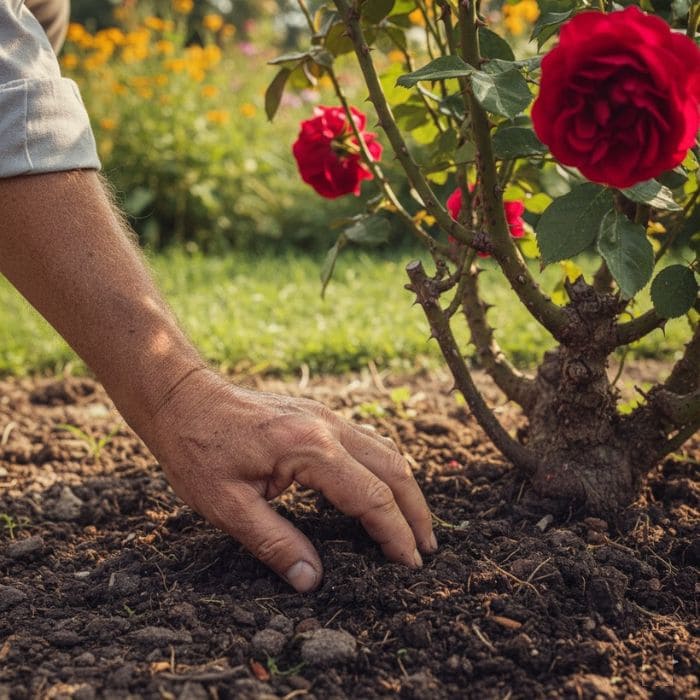
He crouched down and examined it closely. He brushed soil aside to look at the base. He pressed his fingers into the earth near the roots, feeling how firm and cool it was. He traced one of the older canes with his hand, slowly, respectfully.
“This isn’t grafted,” he said quietly. “This grew where it stands.”
He talked then about old roses disappearing, not because they are weak, but because they do not travel well. They cannot be shipped easily. They cannot be standardized. They resist being turned into products.
He said many of the plants he finds now come from abandoned farms, forgotten cemeteries, or properties where no one remembers the names anymore.
“This one,” he said, standing up slowly, “has never left home.”
The Offer That Did Not Matter
He looked at me then, measuring not the rose, but my reaction.
“Eighty dollars,” he said, calmly, as if stating a fact rather than making an offer.
I did not answer. He waited a moment, then added, “One hundred.”
I still did not answer, because there was nothing to negotiate. The money did not offend me, and it did not tempt me either. It simply did not belong here.
This rose was planted by my grandfather. It has lived through storms, droughts, neglect, and care. It has outlived people. It has watched the garden change and remain the same.
I told him gently that we do not sell plants from this garden, especially not the old ones.
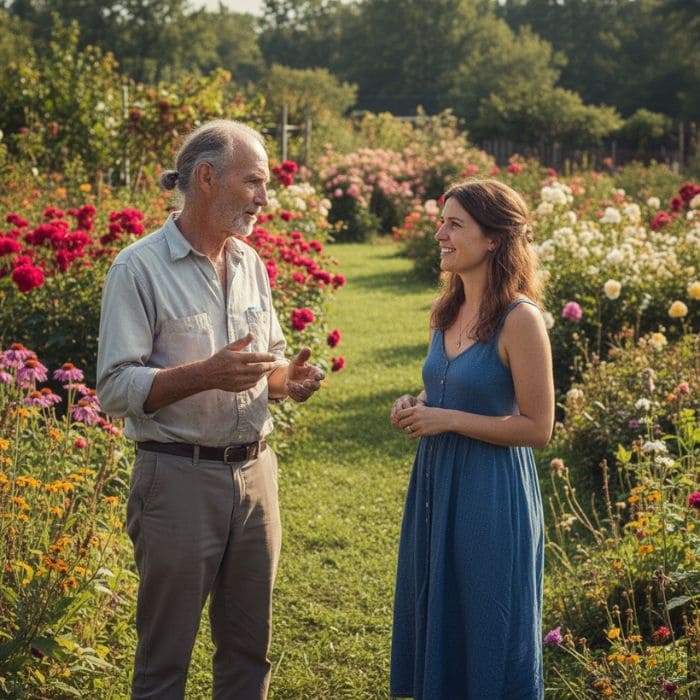
He did not push. That was the moment I respected him most. He nodded slowly, looking back at the rose one more time, not disappointed, but thoughtful.
“You’re doing the right thing,” he said. “Some plants aren’t meant to move. They’re meant to stay and teach.”
We stood there longer, talking about how easily living history disappears when it is treated like inventory. He told me he did not come here expecting to buy. He came to see if places like this still existed.
After He Drove Away
When his truck disappeared down the road, the garden felt unchanged, which felt important.
That visit reminded me why this garden exists. Not to sell, not to collect praise, but to hold things in place. To protect living history by letting it remain where it belongs.