The Summers When Roses Move Indoors With Us
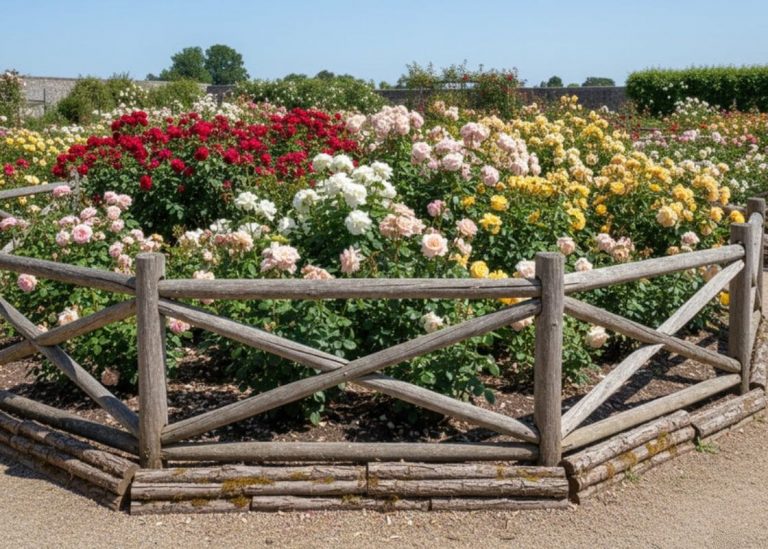
Every summer, there comes a point when the garden feels too full to stay outside. The roses bloom faster than I can walk past them, especially after a few warm nights followed by gentle morning light. If I leave everything on the bushes, petals begin to drop onto the soil by afternoon, and the scent…
Every summer, there comes a point when the garden feels too full to stay outside. The roses bloom faster than I can walk past them, especially after a few warm nights followed by gentle morning light.
If I leave everything on the bushes, petals begin to drop onto the soil by afternoon, and the scent grows heavy in a way that feels almost wasted.
That is usually when I know it is time to cut roses and bring them indoors, not to decorate in a formal way, but to let the house take part in what the garden is offering.
Why Damask Roses Always Come First
Among all the roses we grow, Damask roses are the ones I reach for instinctively. They do not stand stiff or tall like some modern varieties.
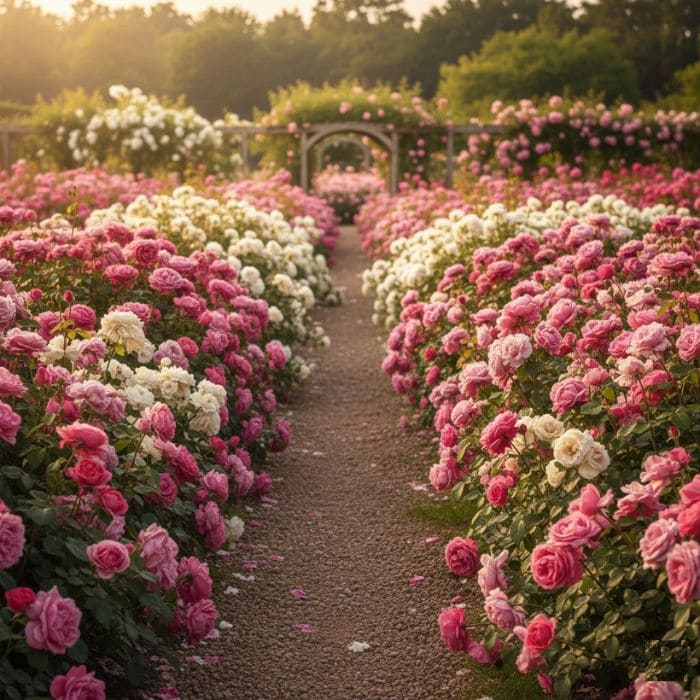
Their blooms are round and soft, made up of many thin petals layered loosely, never perfectly arranged. When they open, they feel generous rather than precise.
The color is usually a muted pink, sometimes pale like early morning light, sometimes deeper, leaning toward dusty rose.
In certain hours of the day, especially just before sunset, they almost look silvered, as if the light passes through them instead of resting on the surface.
Their scent is the reason I love them most. It is strong, but not sharp. Warm, but not heavy. When you bring Damask roses inside, the fragrance does not hit you all at once.
It settles slowly into the space, moving from room to room, staying long after the flowers begin to soften. Even when petals fall, the scent remains in the air, faint but present.
If cut at the right time, Damask roses last longer than people expect. Four days easily. Sometimes five or six if the weather stays mild.
What My Grandmother Taught Me About Cutting Roses
I did not always cut roses well. In my first years, I chose fully open blooms because they looked ready and impressive.
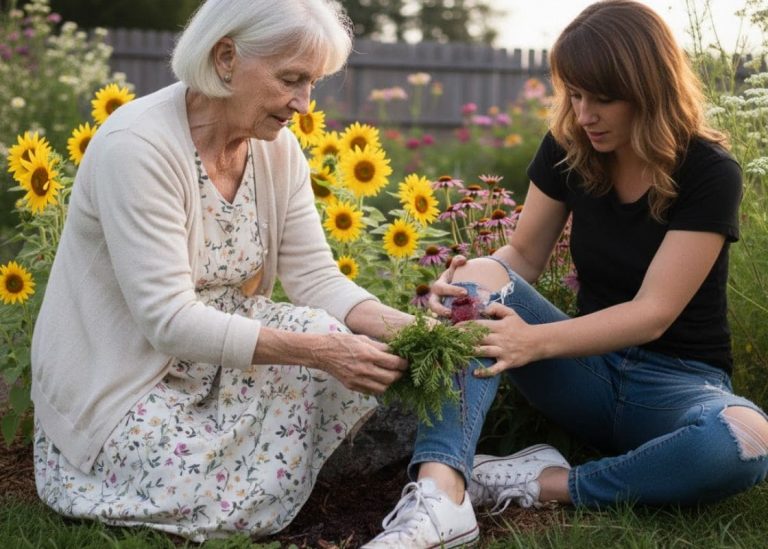
My grandmother stopped me one morning, took a rose gently from my hand, and showed me what I was missing.
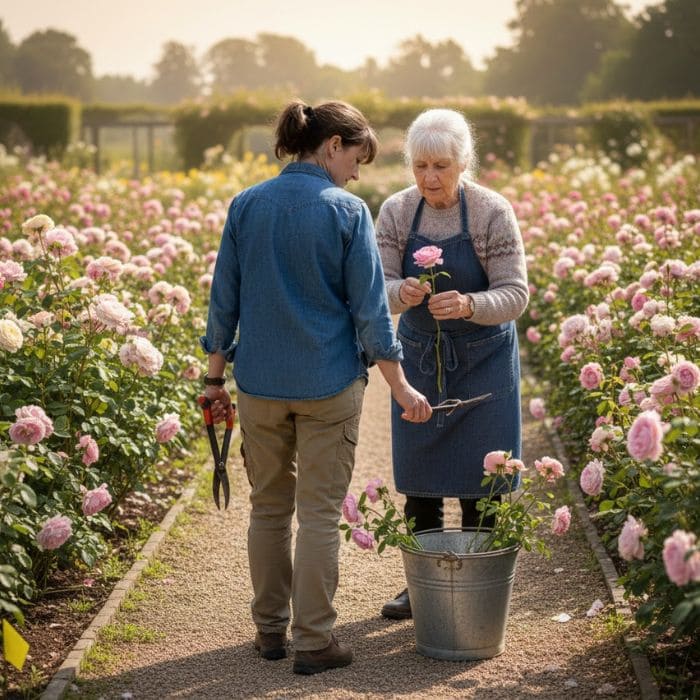
She taught me to cut roses early in the morning, before the sun warms the petals. The bloom should be just beginning to open, soft but still holding its shape.
She showed me how to hold the stem steady and cut at an angle, not straight across, so the rose can drink properly once indoors.
She also taught me to strip the lower leaves immediately, never letting them sit in water, and to place the stems into a bucket of clean water before I even thought about bringing them inside.
“Flowers don’t like delay,” she said. “They notice.”
The Morning I Cut More Than I Planned
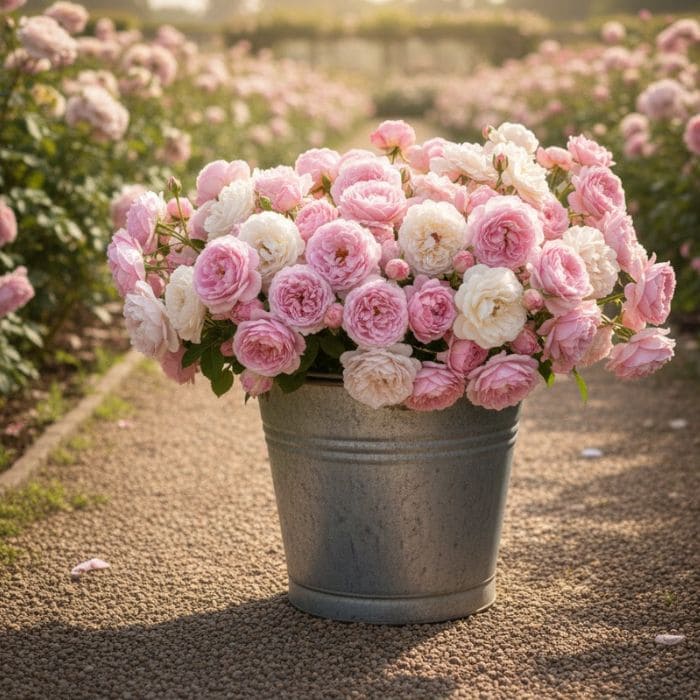
Some mornings, the Damask roses bloom all at once. It usually happens after a cool night followed by gentle sun.
I start with one bush, then another, then another, moving slowly, choosing blooms carefully. I lay the stems across my arm, adjusting them so petals do not bruise.
On those days, I do not count as I go. I just keep cutting until the bushes feel lighter. Later, when I gather everything together, I realize how much I have taken.
Once, I counted afterward and realized there were nearly one hundred Damask roses in that single harvest.
At first, it felt excessive. Then it felt responsible. Leaving that many blooms on the bushes would only mean fallen petals by the next day.
How I Arrange Them Indoors
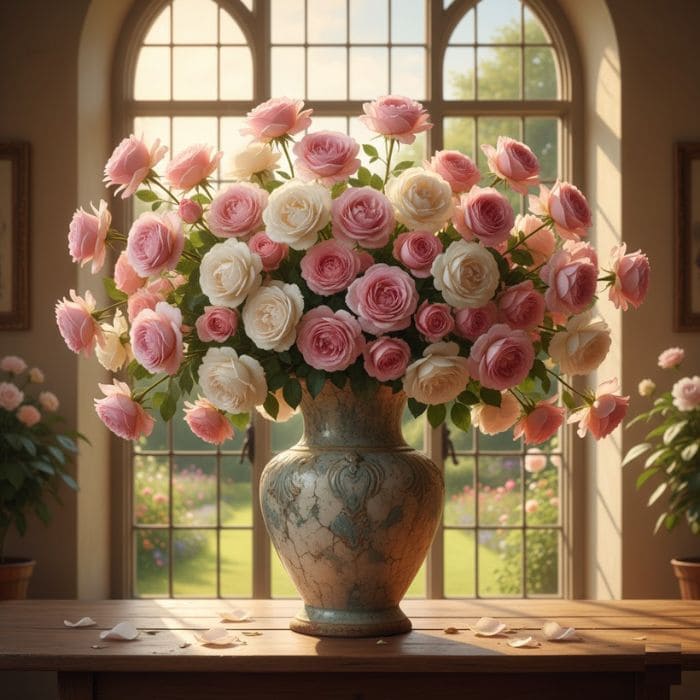
Inside the house, I keep things simple. I do not use floral foam or complicated structures.
I use large glass vases, old ceramic pitchers, and a wide bowl my grandmother has had for decades. Before arranging, I trim each stem again under water so no air enters the cut.
I place the tallest roses in the center and let shorter ones lean naturally around them. I never force symmetry. Damask roses resist being controlled. They prefer to touch, overlap, and lean into one another.
Usually, I make three arrangements. One large one on the kitchen table, where we pass it constantly. One near the living room window, where light moves across the petals throughout the day. And a smaller one in the hallway, so the scent follows you as you move through the house.
By midday, the cottage smells like roses warmed gently by sunlight.
When the Roses Begin to Fade
Even with care, roses are honest about time. Some evenings, I notice petals loosening at the edges. By morning, a few have fallen quietly onto the table or floor. The color fades slightly and the blooms soften.
At first, this bothered me. It felt wasteful to enjoy them for such a short time. Then I realized the garden gives more than we can keep for ourselves.
Sharing What We Cannot Hold
Now, when I cut large bunches of Damask roses, I plan to share them. I separate the stems into smaller bundles of ten or twelve, tie them loosely with string, and wrap the ends in damp cloth. Then I drive into town.
I leave them on friends’ kitchen counters. I hand them over at doorways. Sometimes I bring them to a café table when meeting someone.
The reaction is always the same. People lean in, pause, and say, “I didn’t know roses could smell like this.”
By the time I return home, the house still holds its share of blooms, and the garden feels lighter, ready to offer more without strain.